
Reviewed · CITY TOURS
Kathmandu City Tour
Kathmandu rewards you fast, if you plan it right. This Kathmandu city tour strings together major UNESCO sights and classic temple squares in one organized day, so you are not stuck figuring out routes while daylight is burning. You go up to Swayambhunath for the famous Monkey Temple vibe, then move on to the vast Boudhanath stupa area, and finish with royal square wonders like Kathmandu Durbar Square and Patan Durbar Square.
I love the pace and comfort for a half-day like this, especially the air-conditioned vehicle plus bottled water. I also love that the tour keeps the group small, with pickup offered and a mobile ticket that makes the start feel smooth. One drawback to plan for: entrance fees and lunch are not included, so you will want some extra cash and time buffer at the sites.
You are mostly outdoors, walking on uneven temple paths and steps, so wear grippy shoes and keep an eye on the weather. If you go with the right expectations, this is an efficient way to get your bearings in the Kathmandu Valley.
In This Review
- Key highlights you should care about
- How the day stays organized from 9:00 am to late afternoon
- Stop 1, Swayambhunath Monkey Temple and hilltop icon spotting
- Stop 2, Boudhanath Stupa for koras, chants, and big-scale Buddhist design
- Stop 3, Kathmandu Durbar Square, Hanuman Dhoka, and royal-square courtyards
- Stop 4, Patan Durbar Square and Newari art at Patan Museum
- Price and value, including what you still need to pay
- Comfort, timing, and getting around in Kathmandu traffic
- Who this tour suits best, and who might skip it
- Practical tips so your day feels smooth, not stressful
- Should you book this Kathmandu city tour?
- FAQ
- What time does the Kathmandu City Tour start?
- How long is the Kathmandu City Tour?
- What is included in the price?
- Are entrance fees and lunch included?
- How many people are in the group?
- What happens if the weather is bad?
Key highlights you should care about
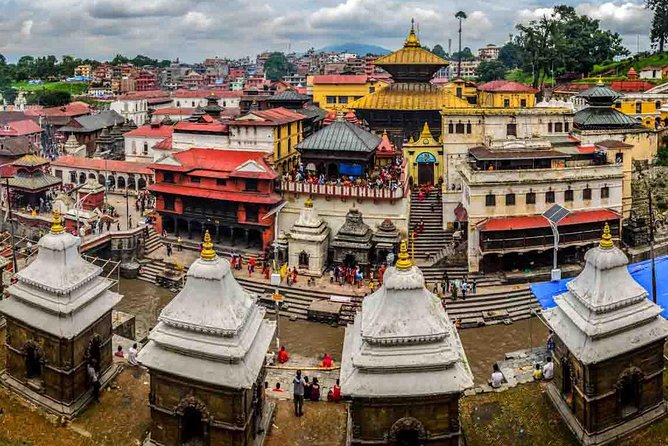
- UNESCO World Heritage sights in one day, including Swayambhunath, Boudhanath, Kathmandu Durbar Square, and Patan Durbar Square
- Monkey Temple hilltop views above the city, plus plenty of Buddhist and Hindu iconography to spot
- Boudhanath koras (circumambulations) for a more lived-in, pilgrim atmosphere
- Durbar Square courtyards and temples tied to the Malla and Shah kings
- Patan Museum option for Newari art and context, not just sightseeing photos
- Small group structure with pickup and a guide-style approach to keep you on track
How the day stays organized from 9:00 am to late afternoon
This tour is built as a single, packed sightseeing run, starting at 9:00 am and running about 7 hours. You get an air-conditioned vehicle, bottled water, and pickup is offered, which matters in Kathmandu because traffic and timing can be unpredictable. A mobile ticket also helps with the flow at the start, so you spend less time juggling paperwork.
The group format is designed to feel manageable, and you are not expected to do this alone. That small-group structure is especially helpful if you want to ask questions on the spot, like what to look for at a stupa or how to approach a royal-square layout.
The practical side: admission fees and lunch are not part of the price, so you will be budgeting along the way. Also, much of the experience is walking and climbing, so plan for comfort over fashion.
More City Tours in Kathmandu
- Kathmandu: Private City Guided Tour
★ 4.9 · 174 reviews - Kathmandu City Tours
★ 5.0 · 66 reviews - Kathmandu Valley City Day Tour
★ 5.0 · 40 reviews
Stop 1, Swayambhunath Monkey Temple and hilltop icon spotting
Your first major stop is Swayambhunath, often called the Monkey Temple. It is a UNESCO site perched on a hilltop, and the experience starts with the climb up to the complex. Once you arrive, you get that instantly recognizable mix of Buddhist and Hindu iconography, and you will also see lots of monkeys around the approaches and platforms.
What I like about this stop is the way it works as a quick orientation to Kathmandu. From the hilltop, you get your bearings on the city below, then the temple iconography gives you cultural context you can carry to the rest of the day. You are also walking through a place where people come to pray, pause, and observe, so it feels more like a living religious site than just a photo stop.
There is one consideration, though: Swayambhunath can be busy and lively, and the monkeys are not shy. Keep your small items secured and be mindful near ground-level areas. Also, admission is not included, so you will need to pay the entry fee separately if you want to go inside.
Time on site is about 1 hour 30 minutes, which is enough for the main viewpoints and a steady loop through the key areas without feeling rushed.
Stop 2, Boudhanath Stupa for koras, chants, and big-scale Buddhist design
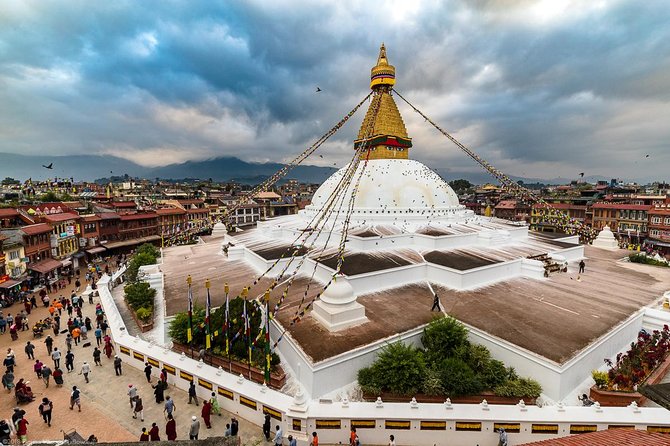
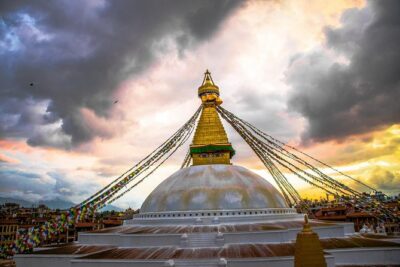
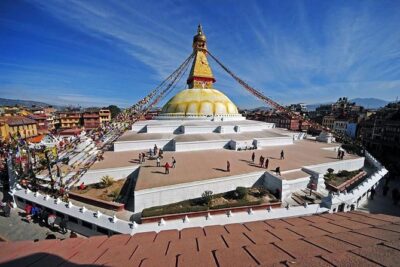
Next up is Boudhanath Stupa, one of the most striking Buddhist monuments in Nepal. The stupa area has a strong sense of proportion and grace, with a whitewashed dome and a gilded tower marked by the all-seeing eyes of the Buddha. Historically, the stupa connects to early Tibetan Buddhist influence after AD 600, when the Tibetan king Songtsen Gampo converted to Buddhism.
Here is why this stop is worth your time: the atmosphere comes from watching a kora in action. If you join the morning or evening circumambulations, you will see pilgrims moving in a steady rhythm around the stupa. Even if you do not follow every custom, you can still understand the space, because the whole area is designed to support that looping, prayerful movement.
The tour allots about 1 hour 30 minutes here, which is enough to take in the scale, find a good viewing spot, and still feel unhurried. As with the other UNESCO stops, admission fees are not included, so you will pay on the ground.
My practical tip: wear layers if the weather turns cool, because open stupa areas can feel chilly even when the city is warm. And if you want quiet moments, step slightly away from the main foot traffic for a few minutes, then rejoin the kora when you want energy again.
Stop 3, Kathmandu Durbar Square, Hanuman Dhoka, and royal-square courtyards
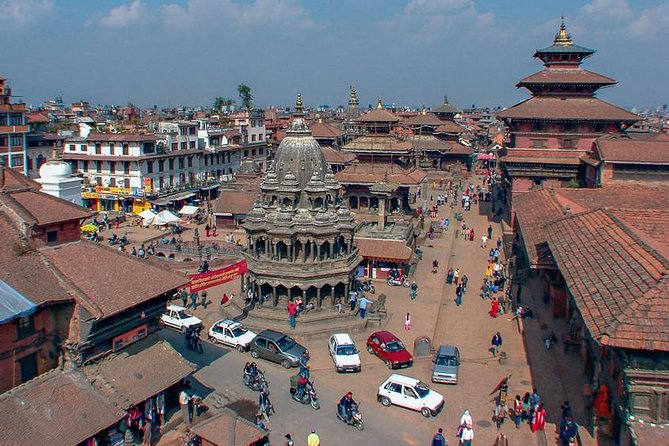
Kathmandu Durbar Square, also known as Hanuman Dhoka Durbar Square, is the plaza in front of the old royal palace of the Kathmandu Kingdom. This UNESCO site is not one single monument, it is a whole complex of palaces, quadrangles, courtyards, and temples. You will see structures connected to both the Malla and Shah kings, which helps explain why this square feels like a layered timeline.
The name Hanuman Dhoka comes from a statue of Hanuman at the entrance of the palace area. That detail matters, because it hints at the religious blend present across Kathmandu, not just in hilltop temples.
What I like here is how the architecture rewards slow looking. Instead of one view, you get courtyards that pull you forward, temple edges that frame specific angles, and open spaces that give you a sense of scale. It is the kind of place where a little guidance helps, because you can understand what you are looking at instead of just snapping pictures.
The time on site is again about 1 hour 30 minutes, which is a good match for a durbar-square visit. Admission is not included, so expect a separate fee. And since this is an active religious and heritage site, dress respectfully and take care around stairs and thresholds.
A few more Kathmandu routes to compare
- 4 UNESCO City Sightseeing in Kathmandu
★ 5.0 · 36 reviews - Full Day Kathmandu City Sightseeing Tour of UNESCO Heritage Sites
★ 5.0 · 36 reviews - Patan and Bhaktapur City Full Day Tour
★ 5.0 · 24 reviews - City tour of Bhaktapur and Patan Durbar Square
★ 4.5 · 20 reviews
Stop 4, Patan Durbar Square and Newari art at Patan Museum
The day finishes with Patan Durbar Square, part of the UNESCO World Heritage zone in the Kathmandu Valley. Patan is often described as the city of art, and the feel here matches that. The royal palace and temple cluster give you a strong sense of craft, with design details you might miss if you rush.
One reason this stop works well is that the tour goes beyond temples by including the heart of Patan’s cultural center. You will get time to explore the square and also the Patan Museum, where you can see rare works of art and learn more about Newari artistic traditions. Even if you are not a museum person, this is useful, because it gives you context for the carvings and design language you are seeing outside.
This segment is also about 1 hour 30 minutes. That is enough time to walk the key courtyards and temples, then choose whether you want museum time or focus only on the square itself. Admission is not included, so check your budget for both museum and temple fees.
My advice: bring an open mind and try to notice patterns, especially repeated motifs and the way temple spaces guide movement. Patan can feel more refined than some other city centers, and once you start spotting the craft details, you will enjoy it more than you expected.
Price and value, including what you still need to pay
The price is listed as $100.00 per group, with up to 10 people in a group, though the maximum number of travelers is also stated as 4. Either way, the structure points to a small, controlled day rather than a big bus crowd. For many people, that small scale is part of the value, because it reduces waiting and makes it easier to ask questions.
What you get for the base price:
- Air-conditioned vehicle
- Bottled water
- Pickup offered
- Mobile ticket
- A guided, structured route through major sites
What you need to budget separately:
- Entrance fees for sites and any museum stops
- Lunch, since it is not included
When I look at value, I think about decision fatigue. This is a day where you would otherwise spend time figuring out where to start, how to connect the UNESCO sites, and what order makes sense. Paying for an organized loop can be cheaper than losing a day of planning, especially when you want to hit multiple heritage highlights in one go.
Comfort, timing, and getting around in Kathmandu traffic
You are on the move for most of the day, riding between the major UNESCO areas in an air-conditioned vehicle. That is a real comfort upgrade when Kathmandu weather shifts and roads get busy. Because the tour is timed, you also get a practical sense of when to be at each stop.
You should still plan for walking. Temple complexes typically involve steps, uneven surfaces, and short climbs. Grippy shoes help a lot, and light layers help for the hilltop and open stupa areas.
If you need a calmer experience, you can use the time windows wisely. For example, at Swayambhunath you can aim to catch a clearer feel early in the visit, then return to quieter corners for icon spotting. At Boudhanath, you can watch the kora flow without feeling locked to one spot for the whole segment.
One more note from how the service is described by people who used the operator: the support style seems to matter. A guide named Ramesh is specifically credited for handling changing needs and keeping the schedule working, which is reassuring if your day is affected by real life changes.
Who this tour suits best, and who might skip it
This tour is a strong fit for people who want UNESCO landmarks without turning the day into a logistics puzzle. It is also a good choice if you like structure, a short museum stop, and cultural context as you move between sites.
It is also suited to many people who want a manageable group format, and service animals are allowed. Since most travelers can participate, this tends to work for a wide range of ages, as long as you are comfortable with steps and uneven ground.
Who might want to think twice: if you are looking for a long, slow, deep architectural study day, this schedule may feel tight. Also, if you are determined to have lunch included, you will need to make your own plan since lunch is not part of the package.
Practical tips so your day feels smooth, not stressful
First, build a small cash buffer for entrance fees and any museum entry, because those costs are separate. Second, eat before you start if you can, then plan for lunch outside the tour since it is not included.
Bring basics that help in temple zones: a respectful outfit, something with easy pockets, and water. You do get bottled water with the tour, but you will still want to stay hydrated while walking.
For Swayambhunath, treat the monkeys like part of the environment. Keep items secure, avoid sudden moves near them, and be patient if you need to step around busy areas.
At Boudhanath, watch the kora rhythm for a while before trying to copy anyone’s pace. You will enjoy it more when you understand that the loop movement is the point, not just the monument.
Finally, if you want better navigation, ask your guide what to prioritize at each stop. People connected with this operator emphasize guidance that helps with practical decisions, like what to focus on for darshan and how to handle on-the-ground purchases and timing.
Should you book this Kathmandu city tour?
I think this is a smart booking if you want a clean, efficient UNESCO day with minimal planning stress. The route covers big-name highlights, and the inclusion of Patan’s museum-style context helps you understand what you are seeing, not just where to stand for photos.
Book it if:
- You want Swayambhunath, Boudhanath, and Durbar Squares without building an itinerary yourself
- You like a small-group structure with pickup and an air-conditioned vehicle
- You are okay paying entrance fees and choosing your own lunch
Skip it or look for a different format if:
- You want lunch included
- You dislike structured schedules and prefer slower exploration
If weather is poor, the experience may be canceled and rescheduled or refunded, so it helps to keep flexibility in your Kathmandu dates. And because free cancellation is offered up to 24 hours before the start time, you can book confidently, then adjust if conditions change.
FAQ
What time does the Kathmandu City Tour start?
The start time is 9:00 am.
How long is the Kathmandu City Tour?
The duration is approximately 7 hours.
What is included in the price?
Included features are an air-conditioned vehicle and bottled water, plus pickup is offered. You also receive a mobile ticket.
Are entrance fees and lunch included?
No. Entrance fees and lunch are not included.
How many people are in the group?
The price is listed per group up to 10, and the additional info also states a maximum of 4 travelers.
What happens if the weather is bad?
The experience requires good weather. If it is canceled due to poor weather, you will be offered a different date or a full refund.
Latest additions near Kathmandu
- White Water River Rafting – 1 Day★ 4.3 · 3 reviews
- Traditional Momo Making Class★ 5.0 · 10 reviews
- Kathmandu to Pokhara Premium sofa bus ticket★ 4.0 · 17 reviews
- Ghorepani Poon Hill Trek★ 5.0 · 16 reviews
- Amazing 1 Day Trekking Experience in Kathmandu Nepal★ 5.0 · 24 reviews
- Ghorepani Poonhill Trek★ 5.0 · 5 reviews
- Walking tour of real Kathmandu through back streets.★ 5.0 · 3 reviews
- Wildlife Adventure in Chitwan Nepal★ 4.0 · 4 reviews
City Tours, compared.
Sarangkot Sunrise with Half or Full-Day City Tour
Read our review →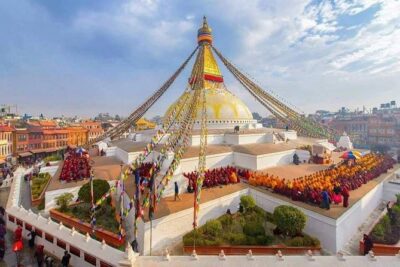
Full Day Kathmandu City Sightseeing Tour of UNESCO Heritage Sites
Read our review →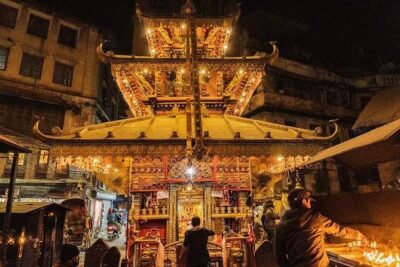
Browse the lists this tour appears in