
Reviewed · NEPALI COOKING CLASSES
Pokhara: 3 Hour Authentic Nepali Thakali Dish Cooking Class
Spices, chopping, and a real Nepali family meal. This Pokhara hands-on Thakali cooking class is built around cooking with a local family chef, not just watching from the sidelines. You also get hotel pickup and drop-off so the day stays easy.
I really like that you actively cook, from chopping vegetables to stirring the pot, while learning how the Thakali flavor balance works in practice. You will focus on one signature Thakali dish, often Dal Bhat or another traditional specialty, with guidance in clear English.
One consideration: this is a food-forward class with lots of spices and tasting, so if you do not want a spicy workload, plan to go at a comfortable pace.
In This Review
- Key things to love about this Thakali class
- A Nepali home kitchen in Pokhara, with hotel pickup
- What the Thakali intro teaches you before you cook
- Hands-on Thakali cooking: chopping, stirring, and tasting as you go
- Spices, utensils, and techniques you can repeat later
- Lunch with soft drinks, built from what you made
- How long 3 hours really works, and how to plan your Pokhara day
- Price and value: what $45 per person includes
- Who should book this Thakali dish cooking class
- Practical tips so your class goes smoothly
- Should you book this Pokhara Thakali cooking class?
- FAQ
- How long is the Pokhara Thakali cooking class?
- What is the price per person?
- Does the tour include hotel pickup and drop-off?
- Is this experience private or shared?
- Do I eat lunch during the class?
- Will I cook or only watch?
- What kind of Thakali dish will I learn to make?
- Is there an English-speaking guide?
- Can I get a refund if I cancel?
Key things to love about this Thakali class
- You cook, not just watch, with a family chef guiding you step by step
- Hotel pickup and a private round-trip transfer keep logistics simple
- A signature Thakali dish focus gives you something concrete to recreate later
- Spice management is part of the lesson, so the flavors make sense, not mystery
- Lunch is included, and you will eat what you help prepare
- English-speaking instruction makes the whole experience easier to follow
A Nepali home kitchen in Pokhara, with hotel pickup
This is one of those tours where the comfort factor matters as much as the cooking. In Pokhara, you meet up and get taken to the kitchen by private car, then you return the same way after lunch. That is a big deal in a place where traffic and timing can get unpredictable, especially if you are pairing this with lakeside time or a short adventure.
Once you arrive, the mood is more home kitchen than cooking studio. The experience is hosted by a cooking family chef who speaks English, which helps a lot if your Nepali is limited. You are not stuck translating gestures. You can ask why a spice goes in at a certain point, and you will get a straightforward explanation.
Also, the class is designed for small-group participation. It is private for your group, so you are not juggling a loud crowd or waiting your turn to stir. That makes the whole 3-hour rhythm feel smooth.
More Cooking Classes in Pokhara
- Nepalese Momos or Dal Bhat Cooking Class (Cook with Delight)
★ 5.0 · 99 reviews - Nepalese Kitchen in Pokhara: Momos or Dal Bhat Cooking Class
★ 5.0 · 67 reviews - MoMo or Dal Bhat Cooking Class at Aama Kitchen in Pokhara
★ 4.9 · 28 reviews
What the Thakali intro teaches you before you cook
Before hands start flying, you get a warm welcome and an introduction to Thakali cuisine. The key ideas are simple and useful: Thakali cooking leans on aromatic spices, wholesome ingredients, and traditional methods that have been passed down.
What I like about this pre-cook phase is that it sets expectations. Instead of treating the dish like a single final product, you learn how ingredients build flavor across the process. That matters because Thakali cooking is not only about heat. It is about balance, aroma, and how the spices work together.
You also get a feel for local sourcing. One of the strongest themes from the experience is homegrown or locally used ingredients, which helps you understand the taste without it being explained as a science project. It also makes the meal feel tied to the place, not just plated for tourists.
Hands-on Thakali cooking: chopping, stirring, and tasting as you go
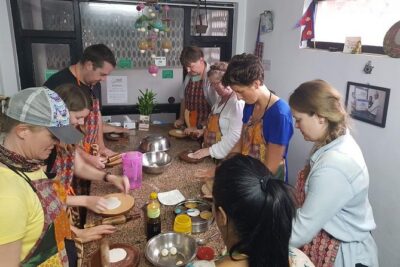
Then comes the part most people book for: you roll up your sleeves. You will head to the kitchen and participate in the prep and cooking steps, including chopping vegetables and stirring pots under guidance.
A detail worth noting from the way these classes are run: chefs often keep spices organized and easy to grab. That is not a minor touch. When spices are laid out and handled in the right order, you can actually learn the flow of the recipe. You see when something goes in early to develop aroma, and when another ingredient is added later for a different effect.
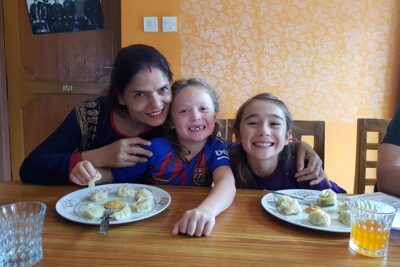
If you want names to hang onto, you might hear from family chefs such as Shanta, Sanva, Roma, or Rita in past sessions. The pattern is the same either way, patient teaching and a kitchen that runs like a team. One parent brought an 8-year-old and the child stayed engaged, which is a good sign that the pace is manageable if you can follow simple instructions.
And yes, tasting happens during the cooking. That is one of the better training tools in any food class, because you learn with your senses, not just by memorizing steps. You get to adjust your understanding as the flavors develop.
Spices, utensils, and techniques you can repeat later
The lesson is not only what to cook, it is how Thakali cooking gets done. You learn techniques that match the tradition, including the use of local spices, traditional utensils, and methods that are not pulled from a Western cooking script.
This is where the class becomes more valuable for you, even if you are not planning to cook Nepali food every week. You leave with a working idea of how to build flavor layers:
- Start with an aromatic base
- Add spices in a controlled way
- Use timing to shape taste and texture
- Keep tasting while you cook
Traditional utensils can also change the outcome. You get hands-on exposure to the way these tools behave in a kitchen setting, which helps you understand why the final dish tastes the way it does.
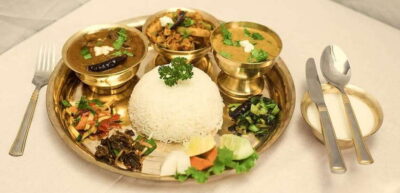
Most importantly, you learn the balance of flavors behind the signature dish. The focus is typically on a Thakali signature dish such as Dal Bhat or another traditional specialty, so you get a clear “main event” rather than five random bites. That makes it easier to recreate at home, because you can anchor your memory to one complete meal.
Another way to spend the time in Nepal:
- ZipFlyer Nepal – The World’s Steepest Zip-line
★ 5.0 · 608 reviews - Bungee Pokhara by HighGround Adventures
★ 5.0 · 366 reviews - From Pokhara: Sarangkot Sunrise Himalayas Tour
★ 4.7 · 218 reviews - ATV Adventure Tour in Pokhara, Nepal
★ 5.0 · 194 reviews
Lunch with soft drinks, built from what you made
After the cooking work, lunch is included. You eat what you help prepare, and there are soft drinks included too. This is not a light snack stop. The portions are part of the point.
A practical tip from past participants: do not eat breakfast before you go. You have a lot of good eating to do. That advice is smart, because otherwise you risk turning your own cooking effort into an awkward afterthought.
The lunch is also where the learning clicks. You taste the result, then you connect it back to the earlier steps. Why the spice timing mattered. Why the vegetables tasted a certain way. Why the flavor balance feels right for a Thakali meal.
And if you care about local culture, this is one of the safest ways to experience it without guessing. You sit, you eat, you learn how the family serves and explains, in the normal flow of their day.
How long 3 hours really works, and how to plan your Pokhara day
The class runs about 3 hours. In practice, that is a good length for two reasons. First, you have enough time to cook a real meal, not just do quick prep tasks. Second, you are not losing your whole day to a long guided tour.
Plan your schedule so you have a comfortable buffer before and after. Since you are eating lunch, you will likely feel full afterward. I would pair it with quieter sightseeing in the afternoon, like lakeside strolling, rather than anything that needs tight timing.
Because the experience includes pickup and drop-off, treat this as a scheduled block. Do not stack another activity too close to the pickup time unless your day is flexible.
Also, if you are booking from overseas and your plans change, note that the class includes free cancellation if you cancel at least 24 hours before the experience start time. That gives you a little breathing room if weather or travel timing shifts.
Price and value: what $45 per person includes
At $45 per person for about 3 hours, the value depends on what you compare it to. This does not read like a budget add-on. It includes a lot that many cheaper food tours leave out.
Here is what you get for the price:
- Hotel pickup and drop-off
- Round-trip transfer by private car
- English-speaking experienced cooking family chef
- All cooking ingredients and utensils
- Lunch with soft drinks
When you add those pieces together, you are paying not only for cooking instruction, but also for access to a home kitchen setup, transport time, and the actual food. For many people, that is what makes it feel fair.
One more angle: private, group-only participation. If you are traveling with family or friends, a private format can feel like better value than you would expect. Everyone gets time at the stove without waiting behind a bigger group.
If your goal is to eat locally and learn something real, this price is easier to justify.
Who should book this Thakali dish cooking class
This class is a strong match if you want one of these things:
- A hands-on food experience rather than a demo
- A chance to meet and cook with a local family chef
- A focused recipe outcome, centered on a signature Thakali dish
- A reliable lunch plan that is included in the tour price
It is also great for travelers who care about spices and process. The way the class teaches spice organization and flavor balance tends to satisfy people who hate vague “add a pinch” instructions.
It may be less of a fit if you want a purely sightseeing-focused day, or if you cannot handle strong spice flavors. The cooking process involves spices, and tasting is part of learning.
For families, the fact that an 8-year-old participated in a previous session suggests it can work when kids are interested in food and hands-on tasks. Your enjoyment will depend on your child’s patience, but the class is not overly formal.
Practical tips so your class goes smoothly
A few simple moves will make your experience better:
- Go hungry. Do not eat breakfast beforehand, if you can.
- Wear comfortable clothes you can work in, since you will be chopping and stirring.
- Bring curiosity for spice timing and technique, not just appetite.
- If you have dietary limits, it is smart to mention them when you book or when you meet your chef, since the class centers on a specific dish and shared kitchen prep.
One more tip: this is a warm, social experience. People in past classes appreciated the friendliness and patience of the hosts. So it helps to relax, ask questions, and treat it like a short visit to a real kitchen rhythm.
Should you book this Pokhara Thakali cooking class?
If you want a memorable food day in Pokhara, I think this is a very easy yes. It hits the sweet spot: hands-on cooking, an English-speaking family chef, private-group comfort, and a real lunch you eat right after cooking. For $45, the inclusion of transport, ingredients, utensils, and lunch makes it feel like more than just a recipe lesson.
Book it if you like spice-forward food, want to learn process, and prefer experiences where you step into local life rather than stand at a distance. If you are very spice-sensitive or you are hoping for a light, low-participation activity, you might want to consider a different style of tour.
My practical advice: plan for hunger, keep the day flexible around the pickup, and treat the class like the main event. If you do that, you will likely walk away with more than a full stomach, you will walk away with a clearer sense of how Thakali cooking builds flavor, one step at a time.
FAQ
How long is the Pokhara Thakali cooking class?
It lasts about 3 hours.
What is the price per person?
The price is $45.00 per person.
Does the tour include hotel pickup and drop-off?
Yes. Hotel pickup and drop-off are included, with round-trip transfers by private car.
Is this experience private or shared?
It is private. Only your group will participate.
Do I eat lunch during the class?
Yes. Lunch with soft drinks is included.
Will I cook or only watch?
You will have a hands-on experience, helping with preparation and cooking steps under the chef’s guidance.
What kind of Thakali dish will I learn to make?
The class focuses on a signature Thakali dish, such as Dal Bhat or other traditional specialties.
Is there an English-speaking guide?
Yes. An English speaking experienced cooking family chef is included.
Can I get a refund if I cancel?
Free cancellation is available if you cancel up to 24 hours in advance for a full refund. If you cancel less than 24 hours before the start time, there is no refund.
Latest additions near Pokhara
- Pokhara: Pokhara Highlights Tour by Bus★ 3.6 · 10 reviews
- Discover Pokhara in Style: Private Vehicle Service with Driver★ 5.0 · 5 reviews
- Pokhara in 5 Hours: Lake, Museum, Cave, Falls & Pagoda Hill★ 4.5 · 16 reviews
- The World Peace Pagoda in Pokhara★ 4.5 · 7 reviews
- 7-Day Trek to Annapurna Base Camp from Pokhara★ 5.0 · 12 reviews
- 4 Day Mardi Himal Base Camp Trek from Pokhara★ 5.0 · 18 reviews
- Unique Easy Hiking to Foxing Hill from Pokhara★ 5.0 · 4 reviews
- World Peace Stupa Day Hike From Pokhara★ 5.0 · 4 reviews
Nepali Cooking Classes, compared.
Nepalese Momos or Dal Bhat Cooking Class (Cook with Delight)
Read our review →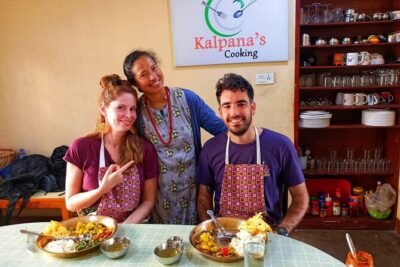
The best Private Nepali Cooking Class in Kathmandu
Read our review →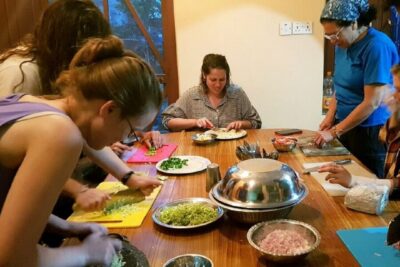
Nepalese Kitchen in Pokhara: Momos or Dal Bhat Cooking Class
Read our review →
Browse the lists this tour appears in