
Reviewed · TREKS IN POKHARA
Pokhara: 1-Day World Peace Pagoda and Lord Shiva Statue Trek
Pokhara has a knack for mixing calm and altitude fast. I love the slow Phewa Lake boat cruise and the big views from the World Peace Pagoda. The only real catch is that this is a hiking day, so it may be too much if you have mobility issues or dislike steep, uneven paths.
One of the best parts is that the day flows like a mini journey, not a single “look and leave” stop. You also get English guidance and enough time to pause for photos, rather than feeling rushed the whole way.
In This Review
- Key Things That Make This Pokhara Hike Worth Your Time
- Setting Off From Pokhara: Why This Day Starts on the Water
- Phewa Lake Boat Ride and the Barahi Temple Island Stop
- The Climb Toward the World Peace Pagoda on Ananda Hill
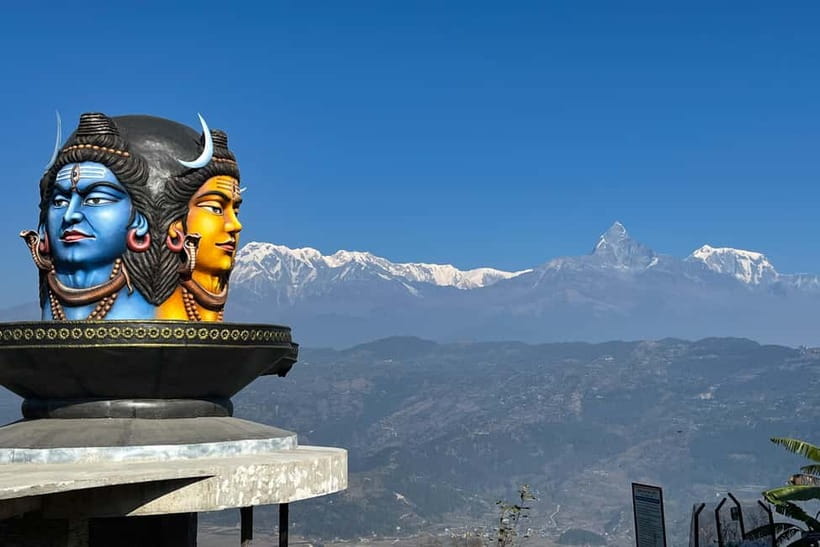
- Lord Shiva Statue in Pumdikot: The Big Moment and the Big Views
- The Lunch Break and Why Timing Helps
- The Final Stretch Back Toward Damside and Lakeside
- What I’d Do Differently: Weather and a View Backup Plan
- How Long Is This, and How Hard Is It?
- Price and Value: Why $28 Can Still Feel Like a Deal
- What to Bring so the Day Feels Easy
- Who This Tour Is Best For (and Who Should Skip It)
- Final Check: Should You Book This One?
- FAQ
- How long is the Pokhara 1-Day World Peace Pagoda and Lord Shiva Statue trek?
- Where does the tour start in Pokhara?
- Is lunch included in the price?
- What is included in the tour price?
- What should I bring for the day?
- Is this tour suitable for people with mobility impairments?
- What views can I expect on clear days?
- How big is the Lord Shiva Statue?
- Is there an option to cancel or pay later?
Key Things That Make This Pokhara Hike Worth Your Time
- Phewa Lake time first, so you start grounded and relaxed
- Barahi Temple on a lake island, a very Pokhara kind of cultural stop
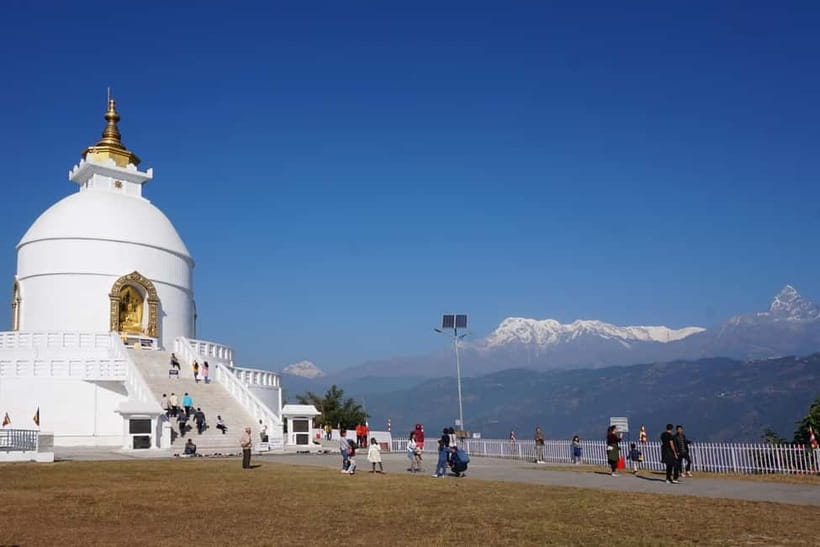
- Ananda Hill views from the World Peace Pagoda, with Himalayan peaks on clear days
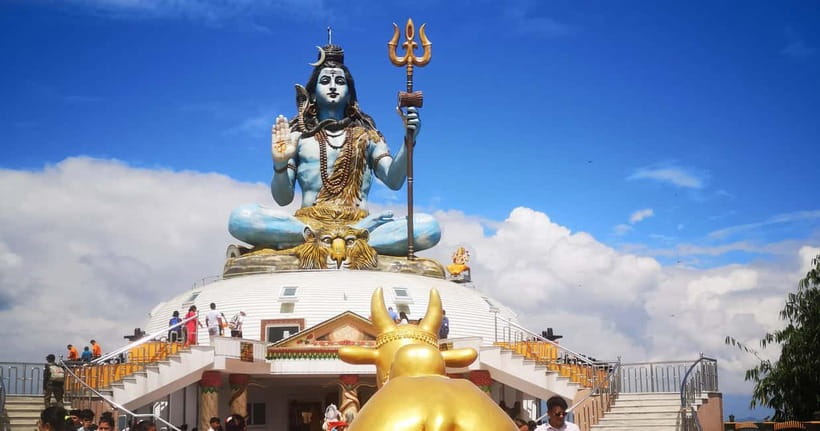
- The 15-meter Lord Shiva Statue, the tallest Shiva statue in Nepal
- A private-group feel, so the pace can match your group
- A real walking circuit, not just quick sightseeing
Setting Off From Pokhara: Why This Day Starts on the Water
This tour is built around a simple idea. In Pokhara, the lake sets the mood. Before you start climbing, you spend time on Phewa Lake, gliding across water backed by mountain scenery.
You’ll get hotel pickup from Pokhara Lakeside at 8:30 AM, with the usual “be ready and waiting” routine in the lobby. From there, the day starts moving gently, with lake travel that helps you warm up without immediately turning it into a workout.
That “start easy” rhythm matters because the route later includes multiple walking sections. Your legs will notice the climb, but starting on the water makes the effort feel more earned than sudden.
More Treks in Pokhara
- Poon hill Trek 3 days
★ 5.0 · 176 reviews - Trekking in Annapurna/Langtang/Everest/Upper Mustang regions
★ 5.0 · 161 reviews - Pokhara: 4-Day Ghorepani, Poonhill & Ghandruk Mountain Trek
★ 5.0 · 132 reviews
Phewa Lake Boat Ride and the Barahi Temple Island Stop
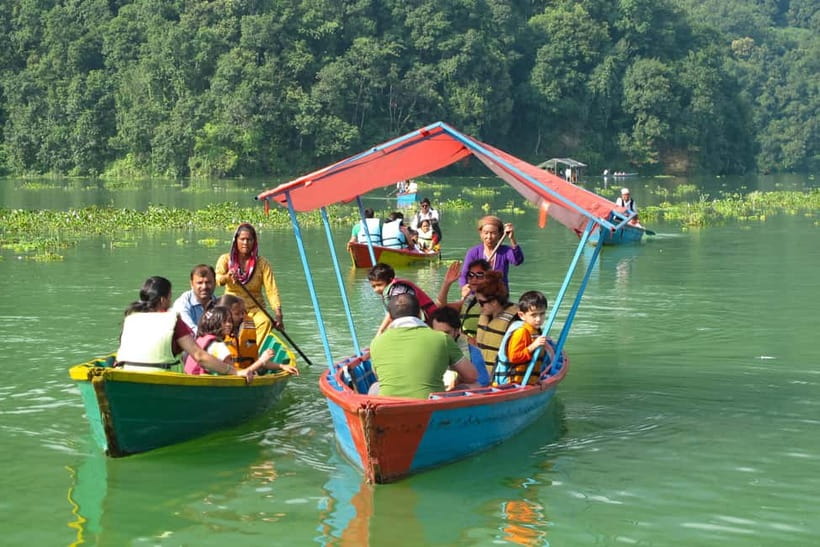
The first major experience is the boat ride on Phewa Lake. This is the part many people remember most because it gives you time to look, not just walk. You float, you breathe, and you watch the light shift over the water and hills.
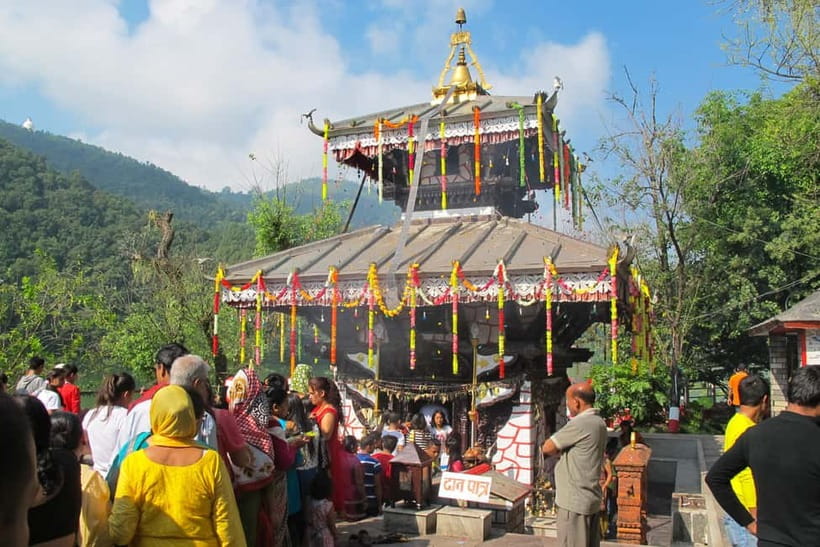
Then you visit the Barahi Temple, located on a small island in the middle of the lake area. It’s a striking cultural contrast to the natural feel of the lake. Temples here are rarely “only scenery.” Even on a short visit, you’re surrounded by the kind of everyday devotion that makes the place feel alive, not staged.
If you enjoy small, meaningful sights over big-ticket monuments, this temple stop is a smart use of time. It’s also one of the easiest parts of the day to enjoy fully, since the lake boat and island visit naturally slow your pace.
The Climb Toward the World Peace Pagoda on Ananda Hill
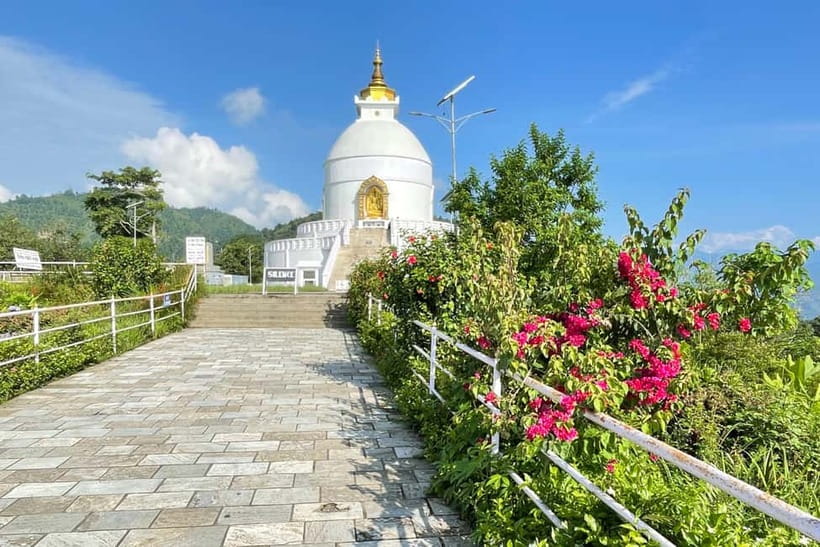
After the island visit, you head back to the shore and begin your ascent toward the World Peace Pagoda. The walking section to reach the pagoda takes about an hour, and the route passes through settlements and shady forest stretches.
That mix is practical. You’re not hiking only through open sun, and you’re not hiking only through jungle-like darkness either. You get changing scenery, plus frequent chances to pause and take photos when you hit clearer stretches.
When you reach the World Peace Pagoda, plan on about 30 minutes for the viewpoint experience. The pagoda sits at around 1,100 meters on Ananda Hill and is designed as a Buddhist monument centered on non-violence and compassion. Even if you’re not religious, the message gives context to why people come here, sit, and linger. It’s not just a photo platform.
The top view is what you’re really there for. On clear days, you can see the Annapurna massif, including Annapurna I (8,091 m) and Dhaulagiri (8,167 m), plus Machhapuchre (6,997 m). If the sky is hazy, don’t panic. You might just get more softened mountain outlines instead of sharp peaks, and the lake-and-city view still works.
Lord Shiva Statue in Pumdikot: The Big Moment and the Big Views
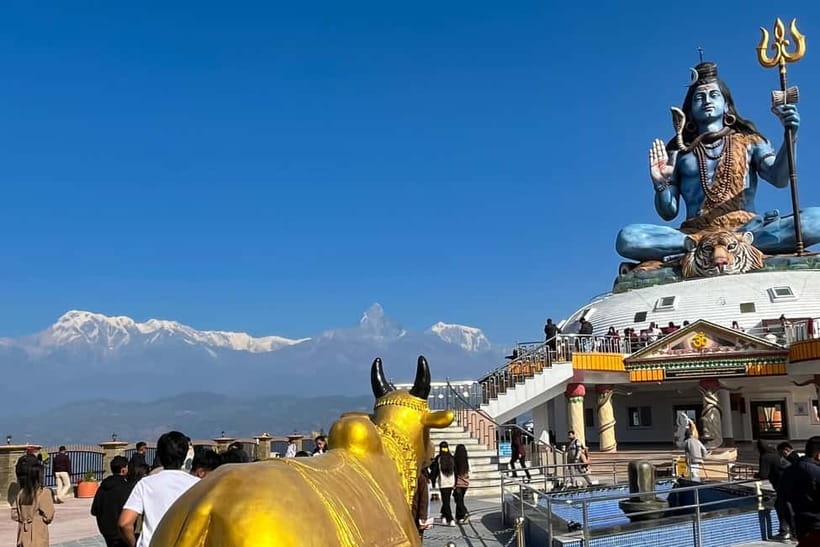
Once the pagoda break is done, the day shifts into another walking section, about 1.5 hours, toward the Lord Shiva Statue in Pumdikot. The statue is over 15 meters tall, and it’s described as the tallest Shiva statue in Nepal.
This is where you feel you’re still in Pokhara, but in a different way. The higher you go, the more the lake becomes a shape, not a presence. You start seeing the region as a set of layers: city below, lake in the middle, and the Himalayas as the headline if conditions cooperate.
When you arrive, you’ll have around 20 minutes for sightseeing at the statue viewpoint. This isn’t a long stop, but it’s usually enough time to circle for a better angle and get a couple of calm minutes to just look.
From here, you can often see Lake Phewa, the city of Pokhara, and on clear days the Annapurna massif again. That repeat view is useful. Even if your first mountain chance from the pagoda was partly clouded, the Shiva statue area can still offer a second shot at clearer sight lines.
Another way to spend the time in Nepal:
- ZipFlyer Nepal – The World’s Steepest Zip-line
★ 5.0 · 608 reviews - Bungee Pokhara by HighGround Adventures
★ 5.0 · 366 reviews - From Pokhara: Sarangkot Sunrise Himalayas Tour
★ 4.7 · 218 reviews - ATV Adventure Tour in Pokhara, Nepal
★ 5.0 · 194 reviews
The Lunch Break and Why Timing Helps
After taking in the statue, you head back toward the World Peace Pagoda area for lunch. Lunch isn’t included in the price, but the tour includes a stop where you can buy your meal.
I like this setup because it avoids the common problem where hiking tours leave you hungry and cranky at the worst possible moment. The day is long enough that a planned food pause makes the effort feel more sustainable.
Also, because this is a guided experience, you’re not stuck trying to figure out what’s nearby or where to eat under pressure. You get time to sit, eat, and recharge before the last walking section.
The Final Stretch Back Toward Damside and Lakeside
After lunch, the route continues with another walking section, about 1.5 hours to Pokhara Damside. Then there’s a quick 30-minute ride to Pokhara Lakeside, where you’re dropped off at your hotel.
This back half is often the mental shift point of the day. You’ve already had the big viewpoints, so the final descent feels more like finishing a loop than chasing something new. That’s good. It keeps the tiredness from turning into frustration.
One practical detail I appreciate here is the taxi transfer from Damside back to Lakeside. If your legs are cooked, the ride saves you from turning the end of the day into a second hike.
What I’d Do Differently: Weather and a View Backup Plan
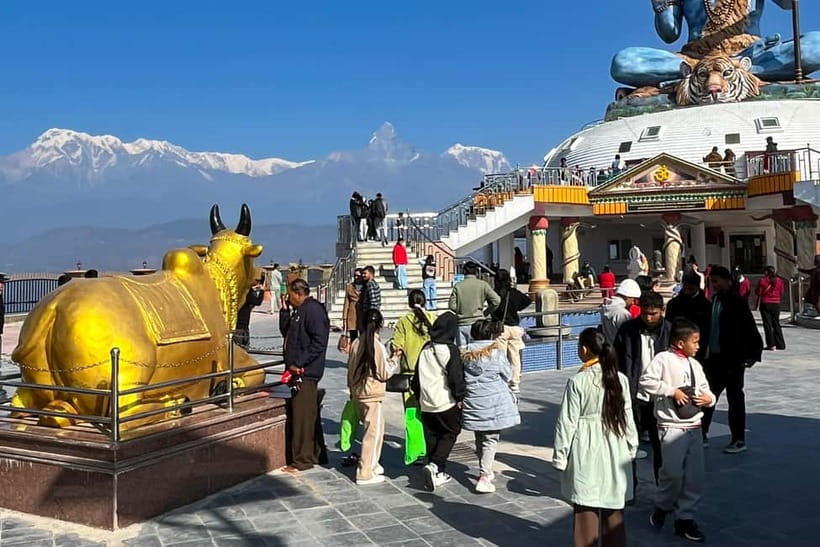
The biggest “variable” on this hike is the weather. On clear days, you’re set up for the Annapurna and Dhaulagiri views. On days with cloud cover, you may see mountains fade out.
A small but useful tip I like from one of the guides who leads this kind of route is to ask about a view plan for the next day if the sky is stubborn. For example, guide Roman Paudel has shared the idea of heading to Sarangkot the following day for a better chance at mountain views. It’s exactly the kind of local, practical backup plan that can turn a partially cloudy day into a win.
Even if you don’t change anything, it helps to go in with the right mindset. This tour is still worth it even if the peaks hide, because the lake time, temple stop, pagoda viewpoint, and statue experience don’t become useless in light cloud.
How Long Is This, and How Hard Is It?
The tour runs about 8 hours in total. That’s a full day, and most of that time comes from walking plus sightseeing stops.
You should expect several hours of on-foot time across uneven terrain and hills. It’s not ideal for mobility issues, and the tour is not marketed as suitable for people who need step-free routes. Comfortable walking shoes are not optional here.
If you’re the type who gets stressed by steep climbs, you’ll likely feel it on the ascent to the pagoda and again on the way to the statue. If you’re comfortable walking for an hour at a time, taking pauses for views, you should be fine.
Price and Value: Why $28 Can Still Feel Like a Deal
At $28 per person, this is a straightforward value play for Pokhara. You’re paying for a full-guided day that combines transportation, a boat ride, and multiple guided stops with set timing.
What makes the value feel real is the mix:
- A boat ride on Phewa Lake with scenic time
- A temple visit that’s culturally specific to the area
- Two major viewpoints on a hike route, rather than one quick viewpoint
- A guided pace so you don’t spend the day figuring out timing and logistics
Yes, drinks and meals are not included, and lunch is something you’ll buy during the stop. But that’s normal for a day like this, and it keeps you flexible with what you eat.
Also, the group setup is private, which can be a big value for families, friend groups, and anyone who wants to move at a more comfortable speed.
What to Bring so the Day Feels Easy
You’ll be on your feet for hours, so plan for comfort and sun.
- Comfortable shoes for hiking
- Hat
- Camera
- Sunscreen
- Water
If you’re the type who hates carrying things, a small daypack helps. Water matters most, because the hike spans multiple walking sections without any guaranteed “sit and snack” time.
Who This Tour Is Best For (and Who Should Skip It)
This tour fits best if you want a classic Pokhara day that mixes lake calm with viewpoint hikes. It’s also great if you like cultural stops like Barahi Temple, not just chasing panoramas.
It’s a weaker match if:
- You have mobility limitations
- You want a low-effort sightseeing day
- You get frustrated by uneven paths and steady walking
If you’re a first-time visitor, it’s also a strong starter option. It hits the lake, a major temple, a peace monument viewpoint, and the famous Shiva statue all in one day.
Final Check: Should You Book This One?
I’d book this tour if you’re excited by a full-day walking route with real payoffs at the top. You get lake time early, temple culture in the middle of the water, and two major viewpoints that can deliver major mountain views on clear days.
I would not book it if hiking sounds like punishment. This is not a short stroll. It’s a long day with multiple hours of walking, and the tour is specifically noted as not suitable for mobility impairments.
If you are on the fence because of the weather, still consider it. Clouds can reduce the sharpness of the Himalaya views, but the lake, the temples, and the viewpoints still make for a memorable day in Pokhara.
FAQ
How long is the Pokhara 1-Day World Peace Pagoda and Lord Shiva Statue trek?
The duration is about 8 hours.
Where does the tour start in Pokhara?
The tour includes hotel pickup in Pokhara Lakeside at 8:30 AM. You should be ready in the hotel lobby at least 15 minutes before pickup.
Is lunch included in the price?
No. Drinks and meals are not included. The tour stops at a local place where you can buy your meal.
What is included in the tour price?
Hotel pickup, a boat ride on Phewa Lake, a visit to Barahi Temple, the hike to the World Peace Pagoda, a visit to the Lord Shiva Statue, and a taxi from Damside to Lakeside after the trek.
What should I bring for the day?
Bring comfortable shoes, a hat, a camera, sunscreen, and water.
Is this tour suitable for people with mobility impairments?
No. It is not suitable for people with mobility problems, because it is a hiking tour with several hours of walking.
What views can I expect on clear days?
On clear days, you can see the Annapurna massif, including Annapurna I (8,091 m) and Dhaulagiri (8,167 m), as well as Machhapuchre (6,997 m), along with views over Lake Phewa and Pokhara.
How big is the Lord Shiva Statue?
The Lord Shiva Statue is over 15 meters tall.
Is there an option to cancel or pay later?
Yes. Free cancellation is available up to 24 hours in advance for a full refund. You can also reserve now and pay later.
Latest additions near Pokhara
- Pokhara: Pokhara Highlights Tour by Bus★ 3.6 · 10 reviews
- Discover Pokhara in Style: Private Vehicle Service with Driver★ 5.0 · 5 reviews
- Pokhara in 5 Hours: Lake, Museum, Cave, Falls & Pagoda Hill★ 4.5 · 16 reviews
- The World Peace Pagoda in Pokhara★ 4.5 · 7 reviews
- 7-Day Trek to Annapurna Base Camp from Pokhara★ 5.0 · 12 reviews
- 4 Day Mardi Himal Base Camp Trek from Pokhara★ 5.0 · 18 reviews
- Unique Easy Hiking to Foxing Hill from Pokhara★ 5.0 · 4 reviews
- World Peace Stupa Day Hike From Pokhara★ 5.0 · 4 reviews
Treks in Pokhara, compared.
Trekking in Annapurna/Langtang/Everest/Upper Mustang regions
Read our review →
4-Day Ghorepani, Poonhill & Ghandruk Mountain Trek
Read our review →
Kathmandu/Pokhara: 5-Day Annapurna Base Camp (ABC) Trek
Read our review →
Browse the lists this tour appears in