
Reviewed · TREKS IN POKHARA
6 days Annapurna Basecamp Trek
One of Nepal’s most visual treks. A 6-day Annapurna Base Camp route that balances big snow-peak views with comfortable teahouse nights. I like how the plan is built around the Annapurna highs without feeling like you are rushing every hour.
You will get standout moments, especially sunrise at Annapurna Base Camp with that 360-degree panorama, and the memorable walk through iconic Gurung villages around Chhomrong. The main thing to consider is the schedule is packed and long-walking days are normal, so you’ll want a moderate fitness base and a realistic expectation of cold mornings and variable trail conditions.
In This Review
- Key highlights that make this trek worth your time
- Pokhara start, private logistics, and why it matters
- Your guide and support system on the trail
- Day-by-day: what you’ll actually experience
- Day 1: Chhomrong viewpoints, then Jhinu Danda’s big bridge
- Day 2: Entering the Annapurna Sanctuary, with up-and-down foothills
- Day 3: Modi River valley, Machhapuchchhre views, and rhododendron forests
- Day 4: Deurali to Annapurna Base Camp, the long scenic approach
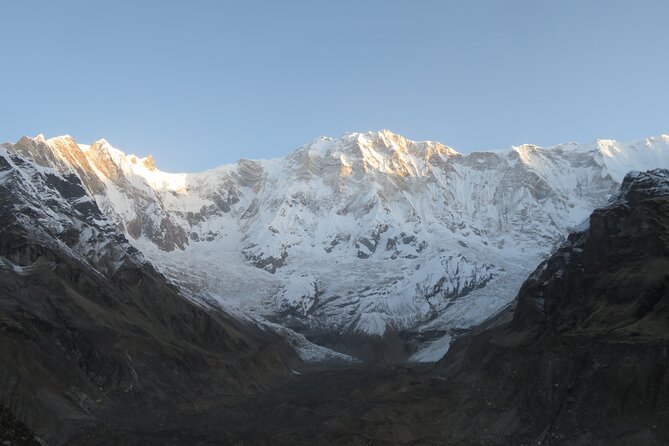
- Day 5: Sunrise at base camp and that Annapurna I color shift
- Day 6: Back to greenery, breakfast views, and the finish feeling
- Teahouse nights and included meals, what to expect
- Gear and comfort: what you should plan for yourself
- Price and value: what $450 buys you, and what it does not
- Who this trek fits best, and who should reconsider
- Should you book this Annapurna Base Camp trek?
Key highlights that make this trek worth your time
- 360-degree sunrise at Annapurna Base Camp and the famous color shift on Annapurna I
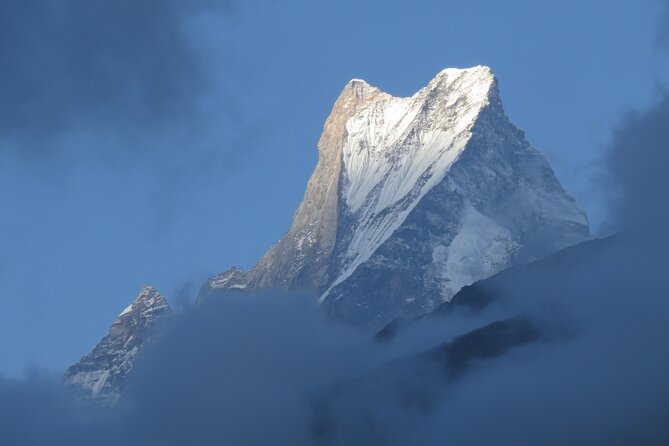
- Chhomrong viewpoints for Annapurna South, HuinchuI, and Mt Fishtail in one sweeping look
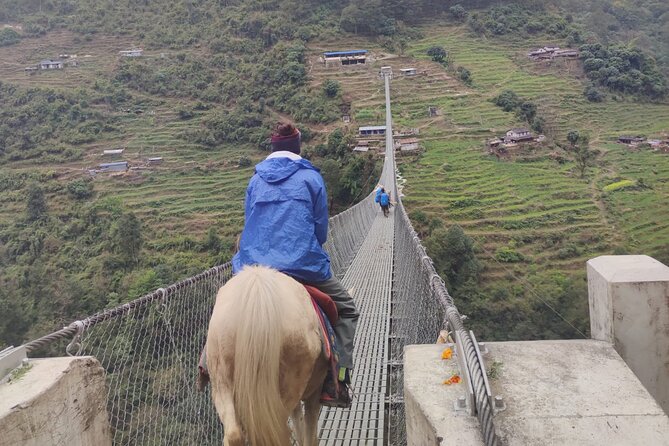
- Jhinu Danda suspension bridge crossing a big drop above the Kimrong River (285 m long, 135 m high)
- Rhododendron forest trekking through thick, colorful growth (over 30 species noted in the route description)
- Licensed, insured guide with a safety-first mindset and private transportation support
- Teahouse accommodations plus key gear like anti slip crampons as needed
Pokhara start, private logistics, and why it matters
Most Annapurna Base Camp treks live or die on the details that happen before you even step on the trail. This one starts out of Pokhara, and you are offered private transportation, which helps you avoid the awkward, time-wasting gaps that can happen with public rides and group shuffling.
You’re also looking at a group capped at 20 travelers, which usually keeps things more manageable than giant trekking crowds. That matters on narrow trail segments, at tea houses, and during those early starts when everyone is trying to get moving before the cold really sets in.
Price-wise, $450 per person is not just a “walk in the mountains” fee. A big chunk goes toward the logistics you do not want to think about while you are tired: private transport, teahouse stays, breakfast, a licensed guide, and the inclusion of some trekking gear like a duffle bag and a sleeping bag, plus anti slip crampons if required.
More Treks in Pokhara
- Poon hill Trek 3 days
★ 5.0 · 176 reviews - Trekking in Annapurna/Langtang/Everest/Upper Mustang regions
★ 5.0 · 161 reviews - Pokhara: 4-Day Ghorepani, Poonhill & Ghandruk Mountain Trek
★ 5.0 · 132 reviews
Your guide and support system on the trail
A trek like this is more than scenery. It is route finding, pacing, and small safety choices you notice only when something goes wrong. This program includes a licensed, experienced, insured guide, which is exactly what you want for a 6-day plan that includes long walking days and cold-weather mornings.
I also like that the operator has a track record in customer feedback for organization and genuine care. In earlier trips organized by the same team, guides such as Saroj have been specifically praised for being informative and friendly, and the owner Rabi has shown up in reviews as hands-on and responsive. You cannot treat past praise as a guarantee of your exact guide, but it is a good sign of the kind of culture you are likely walking into.
If you want extra weight relief, you can hire a porter for $30 per day, but it is not required and you should decide based on your own comfort and how much you plan to carry yourself. If you go with a porter, pack smart. If you do not, use the included sleeping bag and duffle bag so your daypack stays reasonable.
Day-by-day: what you’ll actually experience
Day 1: Chhomrong viewpoints, then Jhinu Danda’s big bridge
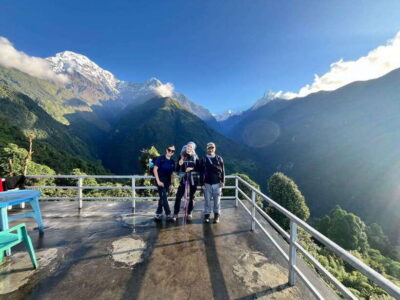
Day 1 is about setting the tone fast. You drive for around 3 hours near the Jhinu Danda suspension bridge area, and then you work in viewpoints around Chhomrong, a village at 2,150 m that offers some of the closest views of Annapurna South (7,219 m), HuinchuI (6,441 m), and Mt Fishtail.
Why Chhomrong is such a big deal: the valley opens and the peaks feel close. This is one of those spots where you understand why people keep coming back to the Annapurna region.
Then you continue to Jhinu Danda, famous for its suspension bridge. The details are eye-catching even on paper: it is 285 m long and hangs 135 m above the Kimrong River. That height is real enough to make you feel your footing, but the crossing is still part of the adventure rather than a technical climb.
Possible drawback for Day 1: you are on the move almost immediately. If you arrive in Pokhara already tired, plan a quiet evening the day before so you do not feel crushed by early starts.
Another way to spend the time in Nepal:
- ZipFlyer Nepal – The World’s Steepest Zip-line
★ 5.0 · 608 reviews - Bungee Pokhara by HighGround Adventures
★ 5.0 · 366 reviews - From Pokhara: Sarangkot Sunrise Himalayas Tour
★ 4.7 · 218 reviews - ATV Adventure Tour in Pokhara, Nepal
★ 5.0 · 194 reviews
Day 2: Entering the Annapurna Sanctuary, with up-and-down foothills
Day 2 starts with a morning view that sets you up for the rest of the trek, with Annapurna South and Mt Fishtail in sight. Then the day turns into the classic Annapurna rhythm: the trail swings up and down through foothills and eventually you enter the Annapurna Sanctuary.
What I like about this day is the mix. You get that “big view” feeling early, then you earn it with actual walking. The Sanctuary part of the route description matters because it signals you are moving deeper into the amphitheater-like terrain where the air can feel cooler and the mountains become harder to look away from.
The tradeoff: undulating terrain can feel deceptively tiring. Even without steep technical sections, repeatedly climbing and descending drains your legs. If you pace well and keep your effort smooth, this day sets you up nicely for the base camp days.
Day 3: Modi River valley, Machhapuchchhre views, and rhododendron forests
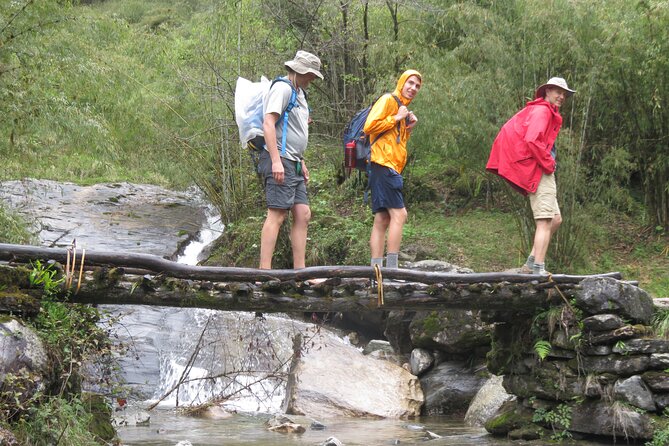
Day 3 leans into two of the Annapurna region’s best ingredients: river valley travel and forest walking. The route gradually climbs upstream along the Modi River, through thick rhododendron forest that includes over 30 species (as stated for this itinerary).
There is a specific highlight tied to Machhapuchchhre in the stop list, and the way the day is described suggests you are looking for clearings and vantage moments as you pass through the forest.
Why you’ll probably enjoy Day 3: it feels different from the open-view days. Trees break up wind, morning light hits differently under the canopy, and the trail feels more “world in motion” rather than only “peak chasing.”
Consideration: if cloud cover hangs low, those view moments can be muted. You still get the forest experience, but if you are hoping for constant summit-level sightlines, come prepared for changing visibility.
Day 4: Deurali to Annapurna Base Camp, the long scenic approach
This is a key transition day. The route moves from Deurali toward Annapurna Base Camp, and the description calls out how scenic the approach can be, including undisturbed views of Mt Fishtail, Annapurna III, Annapurna South, and Annapurna I, plus other peaks.
You also follow the Modi Khola upstream as you get closer to base camp. That upstream travel matters because it keeps the hike feeling purposeful. You are not just walking randomly between villages. You are moving deeper along the valley line that leads to the big moment.
What to watch on Day 4: the day is listed as roughly 12 hours, so you should treat it like a full workday. The best strategy is steady walking, short breaks, and avoiding the trap of sprinting at the start because the scenery is exciting.
If you are carrying your own gear, hydrate early and keep snacks accessible. If you have a sensitive stomach, stick to simple foods at tea houses and do not overdo rich meals on arrival.
Day 5: Sunrise at base camp and that Annapurna I color shift
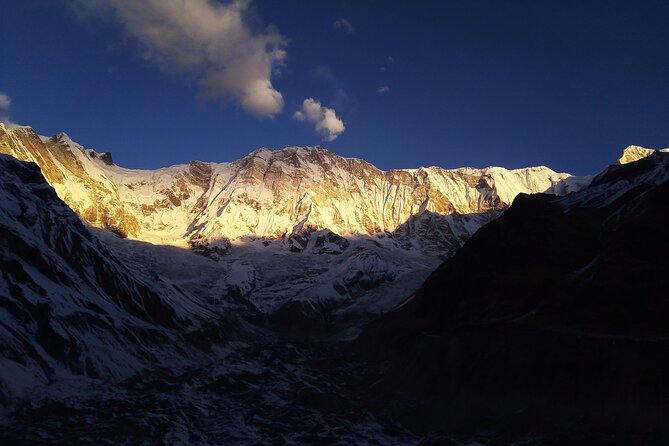
Day 5 is the money day. The itinerary emphasizes early rays of sun hitting the snow peaks in a 360-degree way, and it singles out the color change on Annapurna I during sunrise as the most popular moment.
This is why so many people sign up in the first place. Sunrise at base camp is not just a photo opportunity. It tends to change how you feel about the whole trek. The peaks start as hard shapes, then the light makes them look alive, and you get that rare feeling of being surrounded rather than simply facing a single mountain.
You will spend an easy morning at Annapurna Base Camp after sunrise. That “easy” portion is important. After cold early hours, your body needs time to warm up, and your mind needs time to absorb what you came for.
Practical consideration: sunrise viewing is weather dependent. Clouds can soften the spectacle, but even on imperfect days the base camp setting is dramatic. Bring a headlamp, dress in layers, and do not assume the first light will arrive on a perfect schedule.
Day 6: Back to greenery, breakfast views, and the finish feeling
Day 6 turns the dial back from high-alpine focus to human-scale life. The description says coming back to greenery and civilization feels better and different after a few days in a deep valley and cold weather.
You enjoy breakfast with overview views of layers of hills and the Modi River valley, and the day is designed to end on a calmer note compared with the base camp push.
What I like about finishing here: the day gives you a mental landing. After the intensity of Day 4 and 5, you get time to look around, notice how the terrain changes, and feel the trek wrap up without immediately jumping into another stressful travel segment.
Teahouse nights and included meals, what to expect
This trek uses teahouse accommodation, and the tour includes breakfast for 5 days. Lunch and dinner are not included, which is common for Annapurna treks because tea houses set their own menus and prices.
Because dinners and lunches are on you, I advise you to budget a bit extra so you do not feel stuck hunting for food when you are tired. Also, treat the tea house as part of the experience. The best meals are often the ones you can actually eat comfortably after a big walking day.
Included items also help you travel lighter. The program notes duffle bag/sleeping bag/anti slip crampon as required. That does not replace good layering, but it reduces the chance you show up missing a critical item.
Gear and comfort: what you should plan for yourself
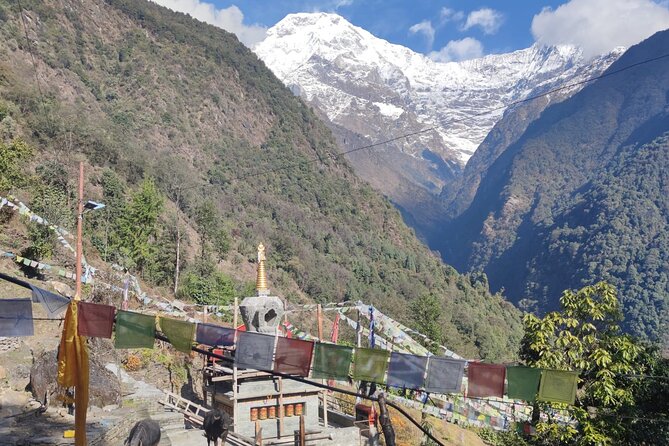
From the provided details, you get some key gear, but you still need to be sensible about the conditions. You should expect cold mornings, especially around sunrise and at higher elevations.
Here is how I would pack for a trek like this, based on what the route is designed for:
- Layering system for early starts (base layer, warm mid layer, outer layer)
- Warm hat and gloves for sunrise time
- Good traction for icy paths, especially after overnight cold (the program includes anti slip crampons if required)
- A headlamp for pre-dawn movement
If you get motion sickness easily, plan for it. Some valley roads to trailheads and early starts can be bumpy.
Also, charging and small comfort items may cost a little extra at teahouses. The tour notes possible small charges for toiletries, WiFi, and charging gadgets, so keep that in mind if you are planning to stay online.
Price and value: what $450 buys you, and what it does not
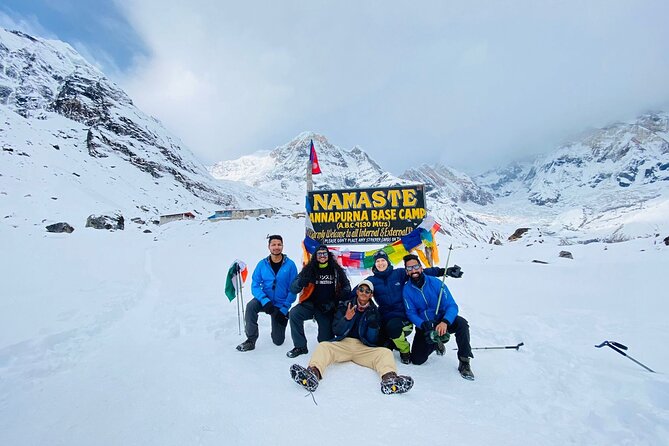
Let’s do the real talk. At $450 per person, you are paying for a lot more than the trail itself.
Included:
- All fees and taxes
- Private transportation
- Breakfast x 5
- Teahouse accommodation
- Licensed, experienced, insured guide
- Duffle bag, sleeping bag, anti slip crampon as needed
Not included:
- Lunch and dinner
- Porter (optional) at $30 per day
- Insurance for clients
- Bottled drinks and some extras like coffee from a machine
- Tips for guide and porter, noted as being service charges included in hotels and restaurants
So the value is in planning and safety support, plus the basics that otherwise become a hassle: gear, guide time, and transport. If you already own trekking gear and you are comfortable self-organizing, you might feel some cost is for convenience. But if you want your trek to run like a well-paced plan, this price structure makes sense.
My recommendation on budgeting: add money for lunch and dinner each day, and decide early whether you want a porter. If your pack is heavy, a porter can pay for comfort quickly, and the difference can be the energy you have for sunrise.
Who this trek fits best, and who should reconsider
This program is clearly aimed at people with moderate physical fitness. The description also calls it one of the shortest and safest Annapurna Base Camp trek itineraries, which suggests a more direct approach compared with longer versions, without adding excessive complication.
You’ll likely love it if:
- You want a tight 6-day timeline without losing the base camp moment
- You prefer an organized plan with a licensed guide
- You care about sunrise views as a top priority
- You are okay with teahouses instead of camping or full-service luxury
You might reconsider if:
- You want lots of recovery time between walking days
- You hate long days of steady hiking (some days are around 12 hours)
- You are not comfortable managing cold and variable trail conditions
Should you book this Annapurna Base Camp trek?
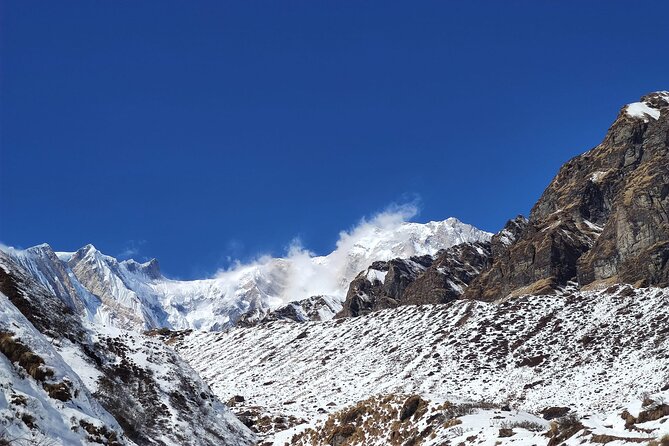
If you want the Annapurna Base Camp experience in a compact, organized package, I think this is a strong pick. The biggest reasons are practical: sunrise at base camp, the key viewpoints through Chhomrong, and the included support that reduces guesswork. The route also gives you variety, from rhododendron forests to suspension bridge thrills.
Before you book, make your decision using two questions:
1) Are you truly okay with long hiking days and cold mornings?
2) Are you comfortable budgeting for lunch and dinner on the trail, plus optional porter support?
If you say yes to both, you are set up for a trek that feels focused, scenic, and well managed from start to finish.
Latest additions near Pokhara
- Pokhara: Pokhara Highlights Tour by Bus★ 3.6 · 10 reviews
- Discover Pokhara in Style: Private Vehicle Service with Driver★ 5.0 · 5 reviews
- Pokhara in 5 Hours: Lake, Museum, Cave, Falls & Pagoda Hill★ 4.5 · 16 reviews
- 7-Day Trek to Annapurna Base Camp from Pokhara★ 5.0 · 12 reviews
- 4 Day Mardi Himal Base Camp Trek from Pokhara★ 5.0 · 18 reviews
- The World Peace Pagoda in Pokhara★ 4.5 · 7 reviews
- Unique Easy Hiking to Foxing Hill from Pokhara★ 5.0 · 4 reviews
- World Peace Stupa Day Hike From Pokhara★ 5.0 · 4 reviews
Treks in Pokhara, compared.
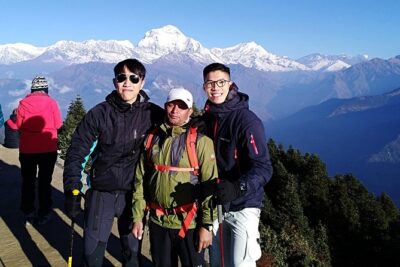
Trekking in Annapurna/Langtang/Everest/Upper Mustang regions
Read our review →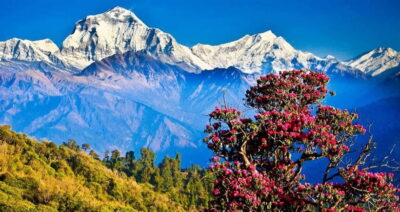
4-Day Ghorepani, Poonhill & Ghandruk Mountain Trek
Read our review →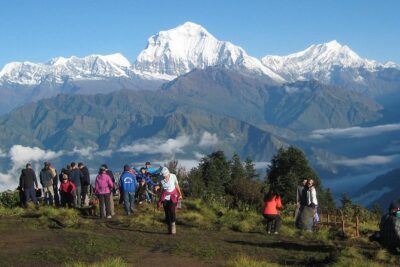
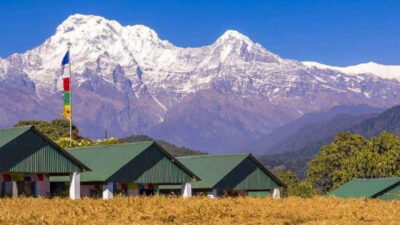
Kathmandu/Pokhara: 5-Day Annapurna Base Camp (ABC) Trek
Read our review →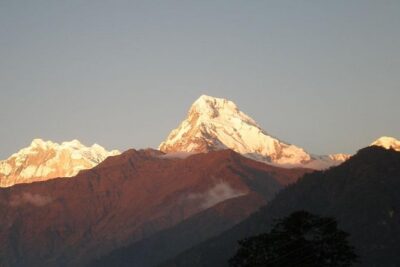
Browse the lists this tour appears in