
Reviewed · TREKS FROM POKHARA
3-Day Ghandruk Loop Trek from Pokhara
This mini trek hits hard in just a few days. You get the famous Annapurna scenery without the weeks-long commitment, walking through Gurung villages and finishing with classic Himalayan panoramas. It is built for your time, with pre arranged lodges and meals that take the stress out of day to day decisions.
I especially like the way this tour combines guided pacing with real trekking hours. Your English speaking guide helps you read the route and keep things moving, and you also get practical support in the form of porters. One thing to keep in mind, though, is that this is still hiking, and the daily effort can feel substantial for a “mini” trek.
If you want iconic Annapurna views, village stops, and a safe-feeling structure, this format makes a lot of sense. Just plan on budgeting a bit for personal extras since drinks are not included.
In This Review
- Key things I’d put on your short list
- The 3-Day Ghandruk Loop: Why this mini trek works
- Day 1 from Pokhara to Ghandruk: Nayapul, first mountain hits, and Gurung village life
- Day 2 sunrise, Modi Khola descent, Landruk and Deurali to Pothana
- Day 3 Pothana ridge views, forest walks to Phedi, and back to Pokhara
- What you get for $330, and what costs extra
- Guides and porters: the difference between trekking and being transported
- Lodges, meals, and the time-saving rhythm of a pre-planned trek
- Who should book the Ghandruk Loop trek (and who might want longer)
- Should you book this 3-Day Ghandruk Loop from Pokhara?
- FAQ
- How long is the 3-Day Ghandruk Loop trek?
- Where does the trek start and where does it end?
- What’s included in the price?
- Do I need permits, and what should I bring?
- Are drinks like tea and coffee included?
- Is the group private and how many trekkers are supported by a porter?
- What is the cancellation window for a full refund?
Key things I’d put on your short list
- Big Annapurna views in a tight schedule via the first loop to Ghandruk and beyond
- A real village day in Ghandruk, including a stop at the Gurung museum
- Sunrise and ridge scenery on the way to Pothana and out toward Phedi
- Transport handled end to end from Pokhara to Nayapul, then back from Phedi
- Meals and guest house stays included, so you can focus on walking and scenery
The 3-Day Ghandruk Loop: Why this mini trek works
The classic Annapurna trek is the kind of hiking bucket list that takes weeks. This route gives you the same flavor in a smaller time window. You cover a key portion of the Annapurna trail network, with a focus on viewpoints and villages rather than trying to cram the entire region into a few days.
What makes it feel smart is the structure. You’re not left to negotiate everything on your own, since lodges and meals are pre planned. That matters because trekking days are long, and decision fatigue is real. When lunch, dinner, and breakfast are already slotted in, you can spend more energy enjoying what is outside your door.
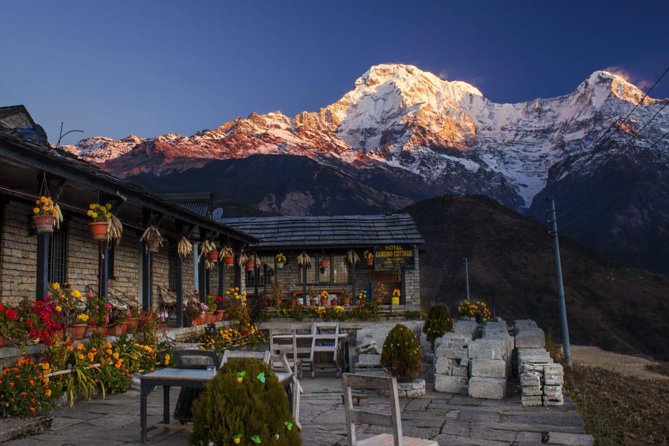
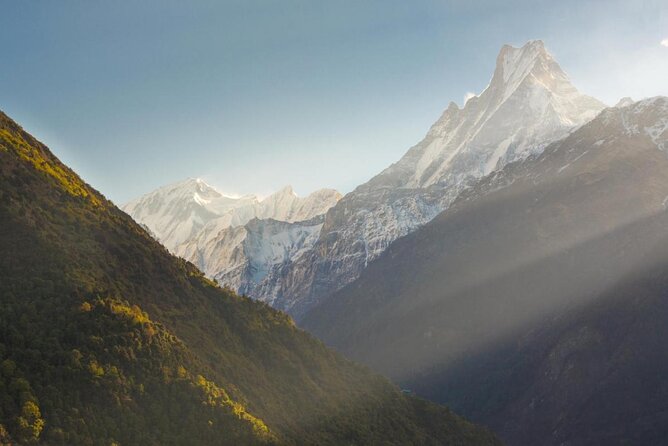
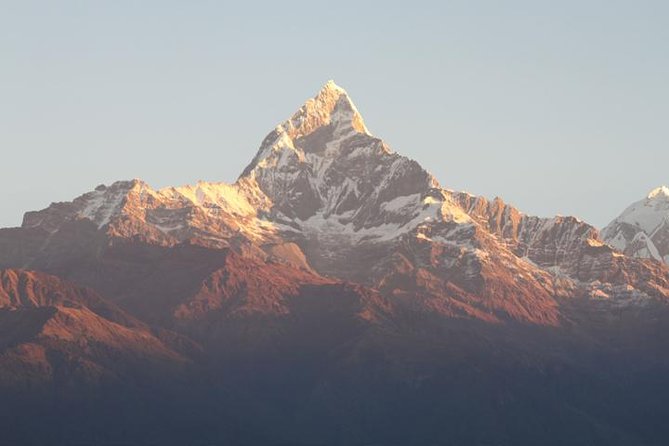
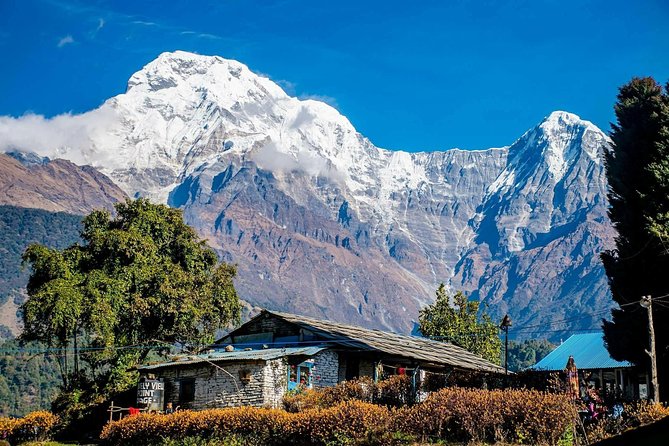
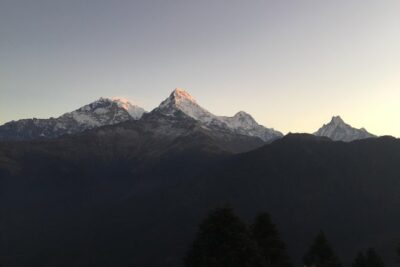
The best part for many people is the scenery payoff. From Ghandruk you can spot peaks in the Annapurna chain, including Annapurna South, Gangapurna, Annapurna II, Hinuchuli, and Fishtail (Machhapuchhare). And later, Pothana adds ridge based views of the Annapurna massif and Fishtail again. It is the kind of repeated mountain framing that makes the whole trek feel like one long photo session, even when you are not trying to take pictures.
More Treks in Pokhara
- Poon hill Trek 3 days
★ 5.0 · 176 reviews - Trekking in Annapurna/Langtang/Everest/Upper Mustang regions
★ 5.0 · 161 reviews - Pokhara: 4-Day Ghorepani, Poonhill & Ghandruk Mountain Trek
★ 5.0 · 132 reviews
Day 1 from Pokhara to Ghandruk: Nayapul, first mountain hits, and Gurung village life
Day 1 starts with a hotel meet up, then a drive to Nayapul. From there, the trekking portion begins with a climb up toward Ghandruk. If you want your first day to deliver quickly, this is the setup. En route, you get those early sight lines over the Annapurna range and even Manaslu in the mix.
Once you reach Ghandruk, the experience shifts from trail drama to village culture. This is a Gurung village, and you get time for the Gurung museum, which adds context beyond just scenery. It is a simple but meaningful stop, especially if you like understanding the people connected to the landscape.
Ghandruk is also a viewpoint hub. From here you can spot multiple named peaks, including Annapurna South and Fishtail (Machhapuchhare). The effect is that you get to “place” what you have been reading about in the Himalaya. Instead of seeing mountain silhouettes as background, you can connect the views to real names you will hear again and again on Annapurna treks.
Practical note: the itinerary lists Ghandruk as a major stop on Day 1. That usually means you can settle in without rushing straight back out, and you also get time to enjoy the village after the trekking climb.
Day 2 sunrise, Modi Khola descent, Landruk and Deurali to Pothana
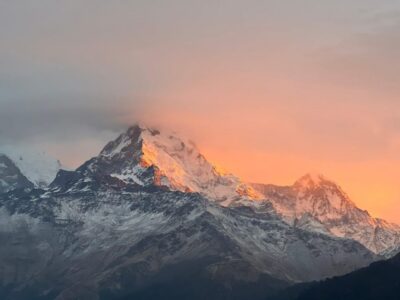
Day 2 starts with an early rhythm: you enjoy sunrise over the mountains and then have breakfast before setting off. Sunrise treks are always a trade, early wake-ups for big rewards. Here the reward is a clear first light look over the Himalayan skyline, before you start moving.
Then the route works like a classic Annapurna rhythm. You trek toward Pothana, but you do it through a sequence of descents and climbs. First, you descend down to Modi Khola. That descent matters because it breaks up the effort and sets up the next climb. Then you begin climbing up to Landruk village.
The trail description is specific about what you will pass through: paddy fields along the way, then onward toward Deurali, which you reach before continuing to Pothana. Those details are useful because they hint at what the walking feels like. It is not only stone and altitude. You are also moving through changing agricultural scenery and rural settlement corridors.
When you arrive at Pothana, it is about location. Pothana is a rural mountain village on a ridge, and it becomes your viewpoint base for the next day too. Think of it as the place where the trail begins to reward you more consistently with panoramas, rather than just occasional glimpses.
The itinerary suggests a longer day in hiking time, so bring the mindset that this is the trekking centerpiece. Day 2 is where you feel like you truly earned the view.
Day 3 Pothana ridge views, forest walks to Phedi, and back to Pokhara
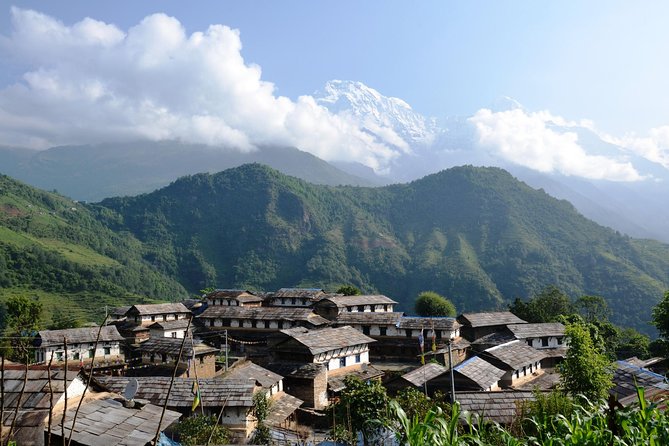
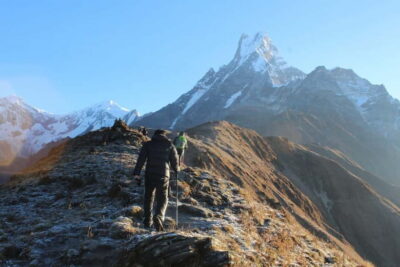
Day 3 begins with more time at Pothana in the morning. Since Pothana sits on a ridge, you get another chance to take in the Annapurna massif and Fishtail views, plus the surrounding mountain silhouettes. This repeat viewing is not boring. It is helpful, because morning light can change the clarity and the contrast of the peaks. You might see more texture in the snow lines or a different angle of the ridges.
After that ridge time, the trek shifts toward Phedi. The route includes “good views of the Himalayas and lush green forests” as you make your way along the trail. That combination matters because it reduces the feeling of only climbing toward higher altitude. You get trees and greenery in the mix, which often makes the last stretch psychologically easier.
When you reach Phedi, that is where the walking ends. Your vehicle is waiting, and you drive back to Pokhara for hotel drop-off. This is a big practical advantage of a mini trek: you do not have to plan the logistics for getting back after hiking all morning. It also makes the end of the trek feel like a finish line, not a second hurdle.
If you are worried about “what happens after the last lodge check-out,” this part handles it. You just walk, then ride.
More treks out of Pokhara:
- From Pokhara: Sarangkot Sunrise Himalayas Tour
★ 4.7 · 218 reviews - From Pokhara: 3-Day Ghorepani Poon Hill Trek with Guide
★ 4.9 · 68 reviews - 3-Day Poon Hill Trek from Pokhara.
★ 5.0 · 45 reviews - From Pokhara: 2 Day 1 Night Ulleri,Ghorepani Poon Hill Trek
★ 4.9 · 33 reviews
What you get for $330, and what costs extra
This trek is priced at $330 per person for about three days, with guided support and lodging and meals included. On paper, it is not just a trail ticket. You are paying for a package of time savers: private vehicle transfers from Pokhara to Nayapul and from Phedi back to Pokhara, guest house accommodation on the trek, and full meal coverage (breakfast, lunch, dinner during the trek).
You also get the human support side. The tour includes an experienced English speaking trekking guide, plus porters with the porter ratio listed as 1 porter for 2 trekkers. That matters because the walking feels different when you are not also managing the bulk of your gear.
Permits are also bundled: it includes ACAP Trek permit and TIMS card fees, as long as you bring the required passport size photos (two photos for TIMS and permit). That is valuable, because permit steps can be time consuming if you try to DIY.
Now, what you should budget for beyond the package: personal expenses and everything drink related. The itinerary notes that any kind of drinks are not included, including tea or coffee, bottled water, and other beverages. Hot shower costs and phone or internet use likely fall under personal expenses too.
Tips for the guide and porters are expected but not mandatory. In practice, that usually means you should be ready to tip if you felt supported.
For value, the strongest argument is simple: you’re buying organization. This mini trek removes many “day to day” choices, which lets you focus on hiking and views instead of logistics.
Guides and porters: the difference between trekking and being transported
A guided hike can sometimes feel generic, but this one is built around hands-on support. You travel with a private group guide, and porters are included with a clear ratio. That combo helps with both confidence and comfort.
In real terms, an English speaking guide does more than point out the next village. They help keep your pace steady, explain what you are seeing, and make sure the route makes sense. When you get tired, having someone who can help you manage time and effort is huge.
One of the standout elements from the experience is the quality of the people. The guides and porter are described as fabulous and very friendly, and the trip was also described as feeling safe. Names came up too, including Ramesh as the guide and Bhattabaikuntha as the porter in one account. That’s not a small detail. When you have a guide who feels approachable and a porter who is also friendly and reliable, the whole trek feels more like shared travel than hard work.
Also, remember that porters are there for a reason. They are part of the cost structure, and they are not an optional add-on. If you want a mini trek that feels human and supportive, this is one of those formats that delivers that.
Lodges, meals, and the time-saving rhythm of a pre-planned trek
One of the most underrated parts of trekking packages is the way they smooth out the day. You get accommodation at guest houses or lodges during the trek, and meals are included across the three days as breakfast, lunch, and dinner.
That means each day has a rhythm: walk, arrive, eat, rest. You can spend less time scanning menus and more time enjoying village streets and mountain air. It also reduces the risk of arriving too late to find a decent meal and a place to sleep.
The itinerary is also specific about the trail sequence between villages. Day 1 climbs to Ghandruk. Day 2 includes the Modi Khola descent, climb to Landruk, passing paddy fields, reaching Deurali, then continuing to Pothana. Day 3 moves from Pothana to Phedi with forest scenery, and then a vehicle pick-up.
That sequencing matters because it makes the trek feel coherent. You are not guessing what comes next. You are walking through a planned corridor of villages and viewpoints.
Who should book the Ghandruk Loop trek (and who might want longer)
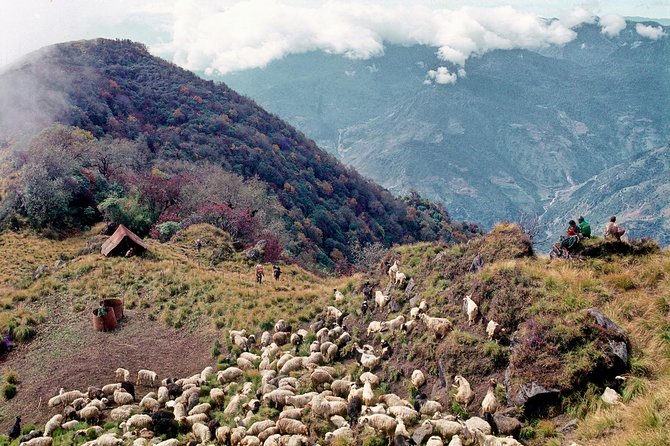
This is ideal if you want Annapurna views but you do not have weeks. It is also a good match if you like village atmosphere. Ghandruk gives you that Gurung village experience and even a museum stop, and the route includes other village nodes like Landruk and Pothana.
Most travelers can participate, and the tour is listed as near public transportation. It is also a private tour/activity, meaning only your group participates. That tends to suit couples, friends, or small groups who want a more personal experience.
If you are chasing a high-intensity, long-distance trek, this will likely feel short. That is not a flaw, it is just a different goal. Think of this as the famous “first loop taste,” not the full Annapurna completion.
Also, plan for drinks to be on your own budget. If you like tea, coffee, or bottled water, you will want to carry some cash or confirm how your group handles purchases during the trek.
Should you book this 3-Day Ghandruk Loop from Pokhara?
I’d book it if you want a guided Annapurna mini trek that is built to reduce logistics headaches. The package structure stands out: pre-arranged lodges, meals included, private transport from Pokhara to the trailhead and back, and permits handled through the tour.
It is also a strong choice if you care about people on the trail. The vibe described is friendly, knowledgeable, and safe, with specific guide and porter names mentioned like Ramesh and Bhattabaikuntha. Those are exactly the kinds of details that make a trek feel worth it, not just scenic.
I would pause if you are very sensitive to long hiking days. Even though it is only three days, the route has meaningful walking time and elevation changes, especially on the day that includes Modi Khola and the climb toward Pothana.
If you want iconic Annapurna scenery, Gurung village culture, and a smooth return to Pokhara without extra planning, this tour is a practical win.
FAQ
How long is the 3-Day Ghandruk Loop trek?
The duration is approximately 3 days.
Where does the trek start and where does it end?
The group drives from Pokhara to Nayapul, and the trek starts from Nayapul. It ends at Phedi, where a vehicle returns you to Pokhara for hotel drop-off.
What’s included in the price?
Included are Pokhara to Nayapul and Phedi to Pokhara private vehicle transfers, accommodation at guest houses or lodges, breakfast, lunch, and dinner during the trek, and an English speaking trekking guide plus necessary porters (1 porter for 2 trekkers). TIMS card fees and the ACAP Trek permit are also included.
Do I need permits, and what should I bring?
Yes. The tour includes TIMS card fees and the ACAP Trek permit. You must bring two passport size photos for the TIMS and permit.
Are drinks like tea and coffee included?
No. Any kind of drinks are not included, including tea or coffee, bottled water, and other beverages.
Is the group private and how many trekkers are supported by a porter?
Yes, it is a private tour/activity for your group. Porters are included with a ratio of 1 porter for 2 trekkers.
What is the cancellation window for a full refund?
You can cancel up to 6 days in advance of the experience for a full refund.
Latest additions near Pokhara
- Pokhara: Pokhara Highlights Tour by Bus★ 3.6 · 10 reviews
- Discover Pokhara in Style: Private Vehicle Service with Driver★ 5.0 · 5 reviews
- Pokhara in 5 Hours: Lake, Museum, Cave, Falls & Pagoda Hill★ 4.5 · 16 reviews
- The World Peace Pagoda in Pokhara★ 4.5 · 7 reviews
- 7-Day Trek to Annapurna Base Camp from Pokhara★ 5.0 · 12 reviews
- 4 Day Mardi Himal Base Camp Trek from Pokhara★ 5.0 · 18 reviews
- Unique Easy Hiking to Foxing Hill from Pokhara★ 5.0 · 4 reviews
- World Peace Stupa Day Hike From Pokhara★ 5.0 · 4 reviews
Treks from Pokhara, compared.
2 Days Chitwan Jungle Safari Tour from Pokhara/Kathmandu
Read our review →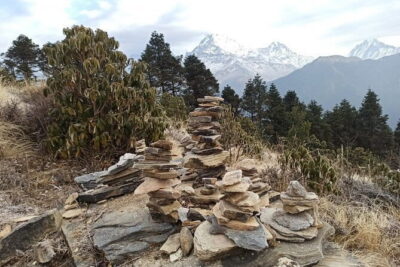
Browse the lists this tour appears in