
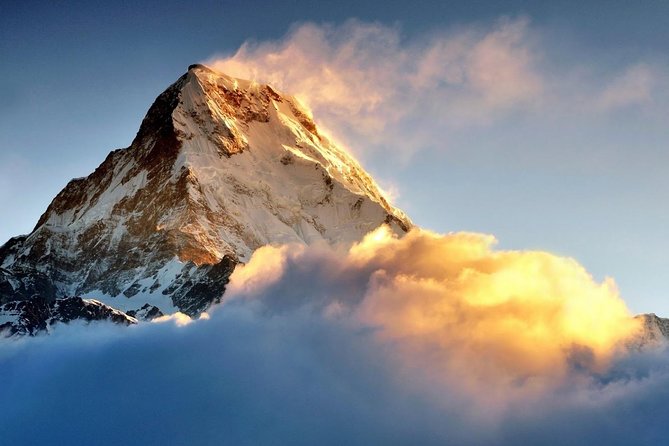
Reviewed · POON HILL TREKS
Poon Hill Trek From Pokhara – 3 Nights 4 Days
A short trek should feel like a high-five, not a compromise. This 3 nights 4 days Poon Hill route is built around a big payoff early in the morning, plus a steady walk through villages and forest in the Annapurna region. You get a practical, guided plan that starts in Pokhara, climbs toward the viewpoints, and finishes in the classic tea house and stone-houses world.
I especially like the Pun Hill sunrise focus and the way the route mixes viewpoints with real local stops. It also helps that you are not doing it solo, since you get a guide and porter support, with meals and tea house lodging included.
One consideration: you will tackle steep steps and several hours of walking each day, so it is not the kind of trip for flat-ground hikers only.
In This Review
- Key highlights you will feel on this trek
- Why Poon Hill fits so well for a short trip from Pokhara
- Route at a glance: Ulleri, Ghorepani, Pun Hill, and Ghandruk
- Day 1: Pokhara to Ulleri step area, rivers, and a steady warm-up
- Day 2: Ulleri and the alpine forest approach to Ghorepani
- Day 3: Pun Hill sunrise at 3,190m, then the rhododendron-ridge walk
- Day 4: Ghandruk village views, Gurung heritage, and the ride back to Pokhara
- Price and logistics: what $600 gets you, and what you still need to plan
- Teahouse lodges and food reality, plus what to expect from the guides
- Who should do this Poon Hill trek, and who might want a different option
- Should you book this Poon Hill trek?
- FAQ
- What is the meeting time and where does the trek start?
- How long is the trek and how many nights do you stay in the mountains?
- What kind of accommodations are included?
- What meals are included?
- Do I get a guide and porter?
- How much walking should I expect each day?
- Is full cancellation possible?
Key highlights you will feel on this trek
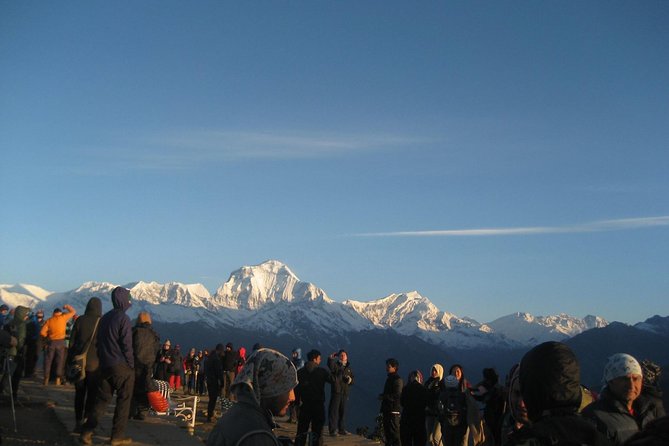
- Pun Hill sunrise at 3,190m with color-changing snow peaks and a wide panorama
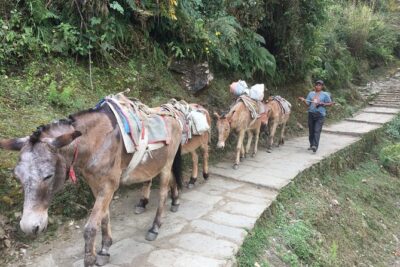
- Guides and porters included, with porter luggage limited to 25kg
- Ulleri and Ghandruk village culture, including Gurung heritage in Ghandruk
- Teahouse lodge stays in the Annapurna region, not hotels with big comforts
- Small group size up to 15, which usually means a calmer trail experience
Why Poon Hill fits so well for a short trip from Pokhara
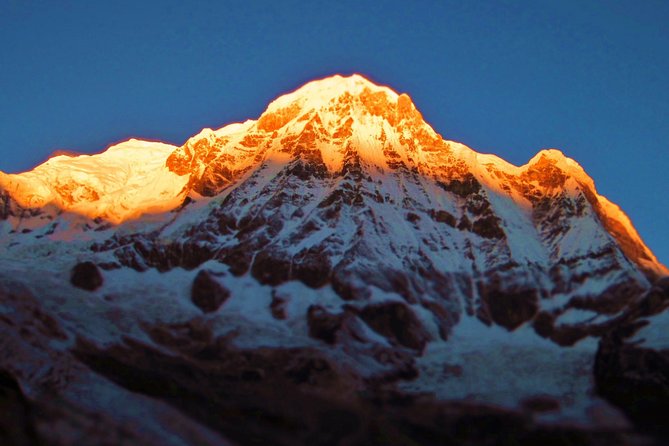
Poon Hill is popular for a reason: it is one of the easiest ways to see an Annapurna-region skyline without burning a full week. In just 3 nights and about 4 days, you get a sunrise viewpoint climb, multiple ridge and forest sections, and a final walk through a well-known village area.
What makes this route especially workable is the pacing logic. Day 1 is a warm-up toward the famous step section, Day 2 builds up through a forested approach to Ghorepani, and Day 3 is the sunrise push followed by a longer daytime walk. Then Day 4 transitions into village scenery before you head back to Pokhara.
You will also like the “you do not have to figure everything out” style. Pickup from your hotel, drive to the trail start, conservation entry permits handled, and a drop back to Pokhara after the trek means you can focus on the hike.
More Treks in Pokhara
- Poon hill Trek 3 days
★ 5.0 · 176 reviews - Trekking in Annapurna/Langtang/Everest/Upper Mustang regions
★ 5.0 · 161 reviews - Pokhara: 4-Day Ghorepani, Poonhill & Ghandruk Mountain Trek
★ 5.0 · 132 reviews
Route at a glance: Ulleri, Ghorepani, Pun Hill, and Ghandruk
This trek uses a classic loop feel, with key stops that match the big sights.
- Day 1: Pokhara to Nayapul, then up toward Thikedunga and the Ulleri step area, overnight at a tea house
- Day 2: steps and village trails through Ulleri, into alpine forest around Ghorepani, overnight at a tea house
- Day 3: sunrise at Pun Hill (3,190m), then down and onward toward Tadapani via ridge and rhododendron scenery
- Day 4: walk down to Ghandruk, enjoy views and lunch, then continue downhill to catch transport back to Pokhara
You can also see how the route gets you multiple types of scenery. Early on it is rivers and steep approaches, then you shift into terraced village life, then into forest walking, then back to stone-and-slate village architecture.
The big promise here is that you are not spending your whole trip staring at one view. You get the view moment, then you keep walking through the people and terrain that created the view.
Day 1: Pokhara to Ulleri step area, rivers, and a steady warm-up
Day 1 starts with a scenic drive from Pokhara to Nayapul. After breakfast, you ride in a private car to the trekking trail head, then begin the climb with the Modi Khola river walk portion for about 30 minutes before crossing at the confluence of the Modi and Burungdi Rivers.
That river-and-confluence start matters more than it sounds. It helps you settle in before the steeper sections, and it gives you time to get your legs moving while the altitude rises in a gradual way.
From there, the trail follows upstream Burungdi and climbs gradually to Thikedunga at the base of the famous 3,000 steps to Ulleri. The itinerary notes about 4 hours of walking for Day 1, and it also offers an option: if you want to make the next day easier, you can climb those steps on Day 1.
For many people, that is the smart choice. If you are feeling fresh, you can shorten the step pressure later. If you are managing energy, you can treat Day 1 as preparation for the step section rather than a full-on stair race.
You sleep in a tea house lodge in the mountains. Expect simple, functional rooms rather than luxury. But the trade is that you are close to the trail, and you are part of the real trekking rhythm of the area.
Day 2: Ulleri and the alpine forest approach to Ghorepani
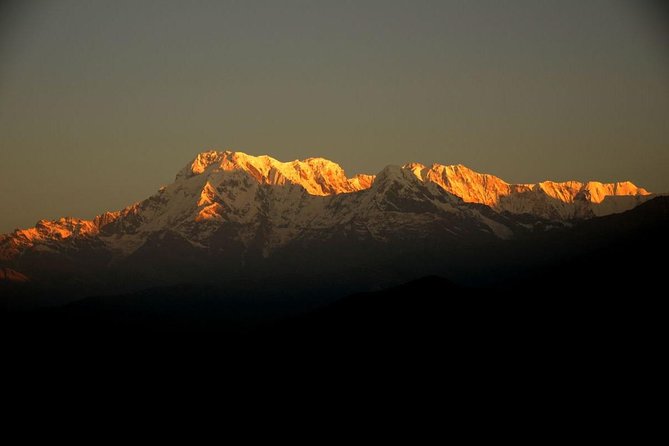
Day 2 begins with the morning steps, about 2 hours of climbing to reach the Ulleri area. Ulleri is described as a Magar village dominated by Pun Magars, located around 2,100m, and it gives you your first proper sense of the Annapurna skyline.
The itinerary highlights first views of Annapurna South and Mt. Fishtail from Ulleri. That is a good mental checkpoint because you can start Day 2 without needing the big sunrise moment to feel like the trip is working.
From the village, the trail climbs into alpine forest, and the walk is broken up by tea houses catering to trekkers. This matters because it reduces the “constant effort” feeling. You get moments to rest, regroup, and keep your pace steady without losing momentum.
The route also references Ghorepani as a mountain pass below Pun Hill, overlooking the deepest valley area of the Kali Gandaki between the Dhaulagiri and Annapurna ranges. Even if you cannot see everything all the way through, this is the kind of section where the region starts to feel big and layered.
Overnight again is in a tea house lodge in the Ghorepani area. By now you have the pattern down: eat, walk, rest, repeat.
A practical tip: on Day 2, try to keep your pace controlled on the steps. This is the day that sets up how you feel for the sunrise climb the next morning.
More Poon Hill treks:
- Ghorepani – Poon Hill Trek 3N-4D
★ 5.0 · 125 reviews - From Pokhara: 3-Day Ghorepani Poon Hill Trek with Guide
★ 4.9 · 68 reviews - 4-Day Private Poon Hill Trekking Tour
★ 5.0 · 58 reviews - Pokhara: 3-Day Ghorephani and Poon Hill Private Trek
★ 5.0 · 58 reviews
Day 3: Pun Hill sunrise at 3,190m, then the rhododendron-ridge walk
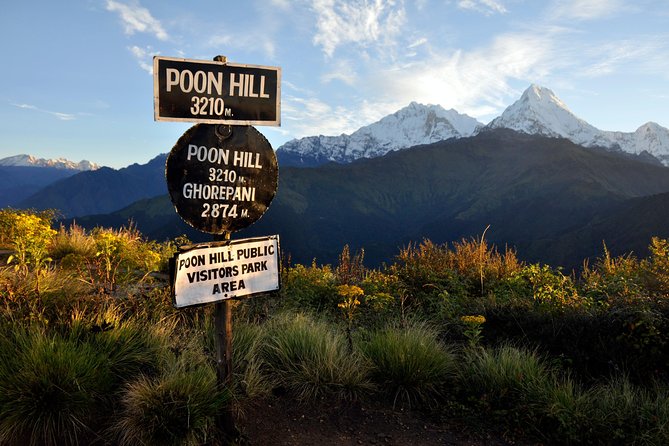
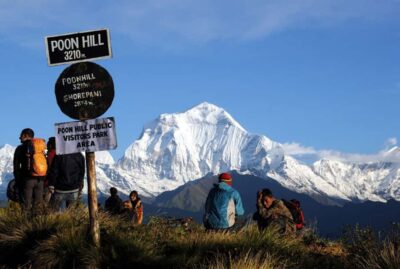
Day 3 is where the itinerary goes from good trek to “wow, that was worth it.” The sunrise view from Pun Hill is the headline, and the hilltop is at 3,190m.
You climb to Pun Hill from Ghorepani, described as about 50 minutes. Because you are aiming for sunrise, the timing is naturally early, so plan for a pre-breakfast start in spirit, even if the exact clock time is up to the local guide plan.
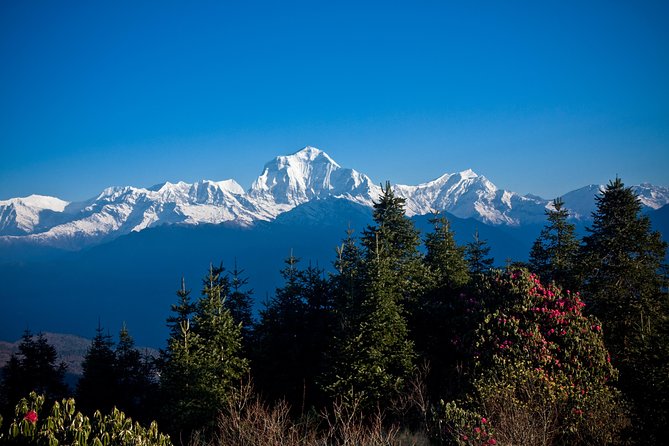
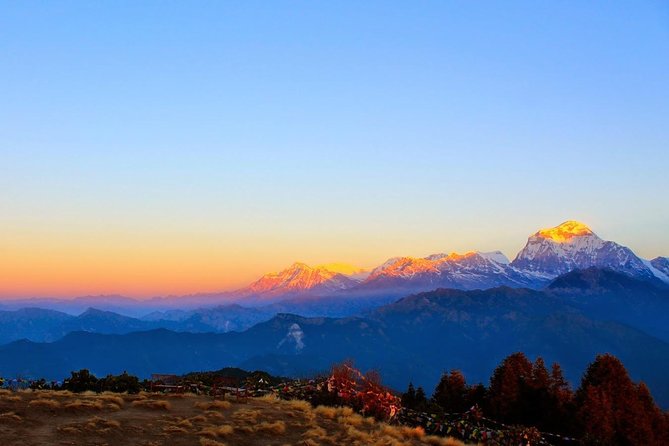
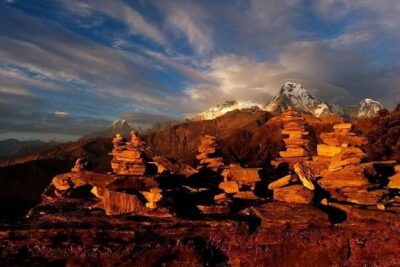
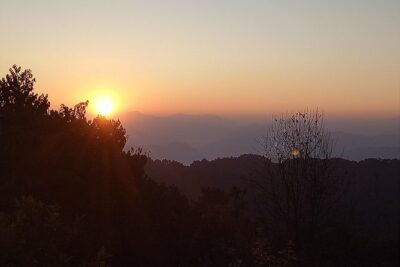
The view itself is described as a color shift, where early rays hit the snow peaks and the tones change from pink to red. You also get a panorama of over 15 peaks across Dhaulagiri, Annapurna, and Manaslu ranges.
The itinerary names three of the biggest: Dhaulagiri (8,167m), Annapurna I (8,091m), and Manaslu (8,157m). Even if you cannot identify every peak by name in the moment, seeing those major silhouettes is the kind of thing you remember when you are back home eating regular breakfast.
After the sunrise moment, you climb down to Ghorepani and then prepare for another day of walking. The daytime trail is described as first climbing toward a ridge top to the east, then following a ridge dense with rhododendron toward Deurali.
This is one of the more interesting “feel” shifts in the trip. You are moving from the open viewpoint world into a path that is more tied to forest texture and seasonal plant life. It can feel quieter than the village sections, even though you are still walking through an active trekking corridor.
Day 4: Ghandruk village views, Gurung heritage, and the ride back to Pokhara
Day 4 starts with the downhill walk to Ghandruk, described as a charming mountain village in the forefront of Annapurna South and Mt. Fishtail.
Here you get the village scene: thatch and slate roofed stone houses, plus farming terraces. The itinerary also emphasizes Gurung heritage, noting that the Gurkha soldiers were linked to the Gurung tribe. That cultural context is one more reason Ghandruk feels like a proper destination, not just a stop to eat lunch.
You are given time to enjoy the views while having lunch in the village. Then you continue downhill for about 1 hour to catch a ride back to Pokhara.
Transport back is described as either a sharing jeep or local bus, and then the group is dropped at your hotel in Pokhara. That last day is valuable because it keeps the trek from stretching into a tiring travel slog. You get to finish while your energy is still decent, then swap hiking boots for city shoes.
Price and logistics: what $600 gets you, and what you still need to plan
The price is $600 per person for about 4 days, and it is useful to evaluate it as “logistics plus guidance plus most meals” rather than as a simple hiking fee.
Here is what the included side covers:
- Tea house lodge accommodations in the mountains
- Pick up and transfers from your Pokhara hotel to the trail start and after the trek
- Conservation entry permits and paper works
- A guide and a porter (porter limited to 25kg)
- Meals included: breakfast (3), lunch (4), dinner (3)
In trekking terms, that is a big deal. Many trips with similar routes quietly add costs for guides, permits, and transfers. Here, those essentials are built in, which makes budgeting easier.
What is not included:
- Personal expenses
- Tipping
My practical take: $600 feels most fair if you value having the permits and transfers handled and if you want porter support. If you already have your own guide and are organizing transport yourself, you might be able to lower costs. But if you want a smooth end-to-end experience with a small group and less admin work, this setup is the kind that tends to pay off.
Also note the group limit of max 15 travelers. Smaller groups usually make it easier to move at a realistic pace and feel less like a conveyor belt.
Teahouse lodges and food reality, plus what to expect from the guides
Tea house trekking is not about four-star rooms. It is about proximity to the trail and the communal rhythm of the mountains. The itinerary explicitly says you stay in tea house lodge accommodations, and the feedback you may run into about sleeping is pretty consistent: the food is generally good, while the rooms can be basic.
That lines up with what you should plan for. Bring the attitude of a hiker, not a hotel guest. A warm layer, a simple sleep setup, and patience with basic facilities make a big difference.
Food is the other piece, and it is included for real. You get breakfast 3 times, lunch 4 times, dinner 3 times, so you are not constantly deciding where to eat. That is especially helpful on a sunrise-focused schedule, since timing can get weird when you are hunting meals before a big climb.
Guides are also a major part of the experience value. The information provided from feedback highlights names like Amid and Padam Bahadur Bhujel, both described as friendly and very helpful. Even if you do not meet them specifically, the key idea is that your guide is there to handle route guidance and keep you moving smartly, not just point at mountains.
Finally, porter support with a 25kg luggage limit matters for comfort. It means you can travel lighter and keep your energy for the steep parts.
Who should do this Poon Hill trek, and who might want a different option
This is a solid choice if you want a short trek that still delivers major viewpoint payoff. The route is specifically designed for people who have limited time but still want to walk in the Annapurna region rather than only do day hikes.
The trek also fits readers with moderate physical fitness. The plan includes step climbing, including the 3,000 steps to Ulleri area and additional climbs throughout the route. If stairs stress you out or you struggle with steady uphill walking, you might feel it here, especially on Day 2 and the sunrise approach on Day 3.
It is also a great pick if you want village culture without a long cultural detour. Ulleri gives you a Magar village feel. Ghandruk gives you the classic stone house and terrace view, plus the Gurung heritage connection.
If you are traveling solo or as a couple, the max group size up to 15 can still feel social without being overwhelming. And if you want someone else to manage permits and basic logistics, this tour style is built for you.
Should you book this Poon Hill trek?
Yes, I would book it if your top priority is seeing Pun Hill sunrise and getting a real Annapurna walk in just 3 nights. The itinerary is tight, but it is not random. It builds toward the sunrise moment, then uses the next day to keep walking through rhododendron-ridge scenery, and ends with the rewarding village finish in Ghandruk.
I would hesitate only if you know you struggle with steep steps or you are expecting hotel-level comfort in the mountains. Tea houses are part of the charm, but they require a basic, practical mindset.
If your goal is a well-guided, value-focused short trek from Pokhara with less logistics stress, this is the kind of plan that fits.
FAQ
What is the meeting time and where does the trek start?
The start time is 9:15 am. You get pickup from your Pokhara hotel, then transfer to the trekking start point (Nayapul) before hiking begins.
How long is the trek and how many nights do you stay in the mountains?
It is about 4 days and includes 3 nights in the mountains.
What kind of accommodations are included?
You stay in tea house lodge accommodations during the trek.
What meals are included?
Meals included are breakfast 3 times, lunch 4 times, and dinner 3 times.
Do I get a guide and porter?
Yes. The trip includes 1 trekking guide and 1 porter, and the porter can carry up to 25kg of luggage.
How much walking should I expect each day?
The itinerary shows roughly 4 hours on Day 1, and about 5 hours on Days 2 and 3, plus a 4-hour day on Day 4 with an added ~1 hour walk within the Ghandruk section before transport back.
Is full cancellation possible?
Yes, there is free cancellation. You can cancel up to 24 hours in advance for a full refund.
More treks out of Pokhara
- From Pokhara: Sarangkot Sunrise Himalayas Tour
★ 4.7 · 218 reviews - 3-Day Poon Hill Trek from Pokhara.
★ 5.0 · 45 reviews - From Pokhara: 2 Day 1 Night Ulleri,Ghorepani Poon Hill Trek
★ 4.9 · 33 reviews - From Pokhara: 4-Day Mardi Himal Base Camp Trek
★ 4.9 · 31 reviews
Latest additions near Pokhara
- Pokhara: Pokhara Highlights Tour by Bus★ 3.6 · 10 reviews
- Discover Pokhara in Style: Private Vehicle Service with Driver★ 5.0 · 5 reviews
- Pokhara in 5 Hours: Lake, Museum, Cave, Falls & Pagoda Hill★ 4.5 · 16 reviews
- The World Peace Pagoda in Pokhara★ 4.5 · 7 reviews
- 7-Day Trek to Annapurna Base Camp from Pokhara★ 5.0 · 12 reviews
- 4 Day Mardi Himal Base Camp Trek from Pokhara★ 5.0 · 18 reviews
- Unique Easy Hiking to Foxing Hill from Pokhara★ 5.0 · 4 reviews
- World Peace Stupa Day Hike From Pokhara★ 5.0 · 4 reviews
Poon Hill Treks, compared.
4-Day Ghorepani, Poonhill & Ghandruk Mountain Trek
Read our review →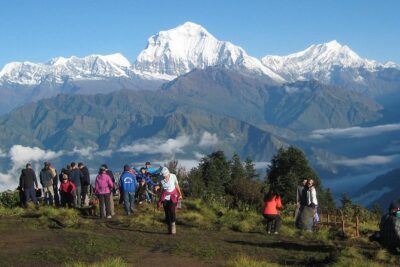
Browse the lists this tour appears in